Accommodation in Stutterheim
The town has a small accommodation offering, with just one property currently listed on booking platforms. Pricing is not publicly advertised at a fixed rate, so direct enquiry with the owner is the most reliable way to establish costs and confirm seasonal availability.
The self-catering option reflects how most visitors use this part of the Eastern Cape: independently, at their own pace, with the freedom to prepare meals from produce bought at local markets. Self-catering suits travellers who plan to use Stutterheim as a multi-day base, heading out to forests and rivers during the day and returning to a private kitchen each evening. This format works well for families or small groups who prefer not to depend on restaurant hours in a town with limited dining options.
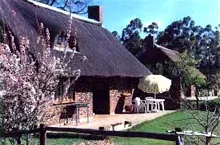
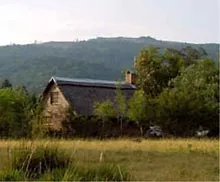
The property landscape in Stutterheim is modest by design. The town has never positioned itself as a resort destination, and the accommodation reflects that: expect clean, functional spaces rather than elaborate facilities. Properties in this region often occupy converted farmhouses or cottages, typically offering basic cooking equipment, bedding, and access to outdoor areas with views over the surrounding hills and timber plantations.
Booking directly with the property rather than through a third-party platform gives you the most accurate picture of what is included and what is not. Given the single listing available, reaching out early is sensible whenever your trip falls during periods of higher regional demand. Longer stays often attract more flexibility from property owners, and a phone call tends to resolve questions faster than an online inquiry form. If the listed property is unavailable, ask the owner whether they know of alternatives nearby, as local knowledge often surfaces options that do not appear on major booking sites.
Best Time to Visit Stutterheim
The elevation that defines Stutterheim's setting shapes its climate in ways that differ noticeably from the Eastern Cape coast. Summers, running from November through February, are warm rather than hot, with afternoon thunderstorms that keep the Amathole forests dense and green. These months suit walking and river activities well, though unpaved access roads can become slippery after heavy rain, so a vehicle with decent ground clearance helps.
Autumn, from March to May, and spring, from August to October, offer settled, mild conditions. Rainfall decreases, temperatures stay comfortable, and the forests hold their colour through late May. These shoulder seasons attract fewer visitors and allow easier access to walking routes without the summer humidity.
June and July bring cold nights and occasional frost at higher elevations. The trade-off is clear, dry air and good visibility on open trails. The dry season reduces flow in local streams, but forest tracks remain navigable.
School holiday periods in South Africa, particularly December to January and April, bring increased numbers of domestic visitors from coastal cities to the inland Eastern Cape. The quietest and arguably most comfortable periods fall in late May, August, and September, when the region sits between peak visitor windows.
Getting to Stutterheim
East London is the most practical entry point, approximately 67 kilometres to the southeast. The city's airport operates scheduled services from Johannesburg, Cape Town, and Durban, with car hire available at the terminal. The drive to Stutterheim takes around an hour, heading north on the N2 before turning onto the R346, both well-maintained tarred roads for most of their length.
From the north and west, the N6 runs through the Eastern Cape interior and connects to regional roads that lead into Stutterheim from that direction. Gravel sections appear on some secondary routes, particularly those climbing toward elevated terrain, and these warrant careful driving after rain. It is worth checking conditions locally before heading out on any unfamiliar back roads.
There is no reliable scheduled bus service connecting Stutterheim to major urban centres. Shared taxis operate on local commuter routes rather than visitor-oriented services, making a private vehicle effectively a requirement for both reaching the town and for day-trip exploration once you arrive. Fill the tank at the local fuel station before heading out, as rural roads to outlying destinations have few service points.
The town centre is compact. The main road runs through the commercial area, with the local museum, shops, and fuel station all within easy walking distance of each other.
Stutterheim and Surrounding Areas
King William's Town, 35 kilometres to the south, is one of the older administrative centres in the Eastern Cape and home to the Kaffrarian Museum, which holds an extensive natural history collection, including significant zoological and archaeological specimens. The town has considerably more commercial infrastructure than Stutterheim, with larger supermarkets, pharmacies, and hardware stores, making it a logical stop for stocking up on supplies before settling in.
Qonce is the officially recognised Xhosa name for the same urban area, and both names appear on road signs and mapping applications at the same 35 kilometres from Stutterheim. Knowing both versions helps when navigating by GPS or reading signage along the route south.
Berlin, 38 kilometres away, is a small agricultural settlement with limited visitor infrastructure. It functions mainly as a waypoint on routes connecting the eastern foothills with the coastal lowlands, and the surrounding farmland is characteristic of the broader Eastern Cape agricultural interior.
Hogsback, 45 kilometres from Stutterheim, is the most distinctive side trip available from town. The village sits in the mountains at around 1,300 metres elevation, surrounded by indigenous forest and frequent mist. Waterfalls and forest trails have attracted a small arts community there over the decades, and the village now has galleries, craft studios, backpacker lodges, and a handful of small guesthouses. It functions as a destination in its own right rather than a passing stop, and the contrast with Stutterheim's more open, drier feel is marked enough to justify an overnight.
Cambridge, 63 kilometres away, is a commercial suburb on the western approach to East London with larger retail options and chain stores absent in Stutterheim.
East London, 67 kilometres to the southeast, is the region's main port city, with a beachfront facing the Indian Ocean and a surf scene that draws visitors year-round. The East London Museum is particularly notable for holding the only mounted specimen of a living coelacanth, the prehistoric fish rediscovered off the South African coast in 1938.
Planning Your Stay
With one property available in Stutterheim, there is no fallback option if the listing is already taken. Make contact with the owner as soon as your dates are confirmed, rather than treating it as a booking you can finalise closer to your trip.
Before confirming, ask specifically whether linen and towels are provided, as self-catering properties in South Africa vary considerably on this point. If visiting between May and August, check whether the property has indoor heating or a fireplace. Cold nights at this elevation can drop well below 10 degrees Celsius, and this detail is not always addressed in standard listings.
Download offline maps before leaving a city with reliable connectivity, as signal on roads into higher terrain can be inconsistent. If your plans include driving on gravel tracks, confirm current road conditions with a local contact rather than relying solely on map applications.
Local shops cover basic grocery needs, but selection is limited compared to larger towns. A supply run early in your stay saves repeated trips later. Petrol is available in Stutterheim itself, but not on outlying roads, so a full tank before any day trip is the sensible default. For longer walks in remote areas, carry a printed or downloaded map as a backup and let someone know your planned route before you set out.