Geelblom Reis- & Akkommodasiegids
Jou volledige gids om Geelblom, Suid-Afrika te besoek.
Geelblom is a small Free State settlement in the heart of South Africa's central interior, where wide-open spaces and agricultural landscapes define the character of the region. The area offers visitors a quiet escape from urban centers, with access to the distinctive terrain and climate of the Free State province.
## Accommodation in Geelblom
No properties are formally listed for Geelblom on major booking platforms at present, which reflects the settlement's scale rather than an absence of accommodation in the broader area. Rural Free State travel has long relied more on direct contact than on centralised booking infrastructure, and travelers prepared to reach out to local farms and guesthouses directly will find options that never appear in online searches. These arrangements are often better discovered through a phone call to the nearest town's tourism office than through any aggregator search.
At the budget end of the spectrum, farm rooms and self-catering cottages attached to working agricultural properties are the typical offering. These are practical arrangements: a bed, a functional bathroom, and access to basic cooking facilities. The value lies in the setting and the directness of the experience rather than in any provision of hotel-standard amenities. Travelers who want affordable shelter while moving through the region will find these options adequate for their purpose.
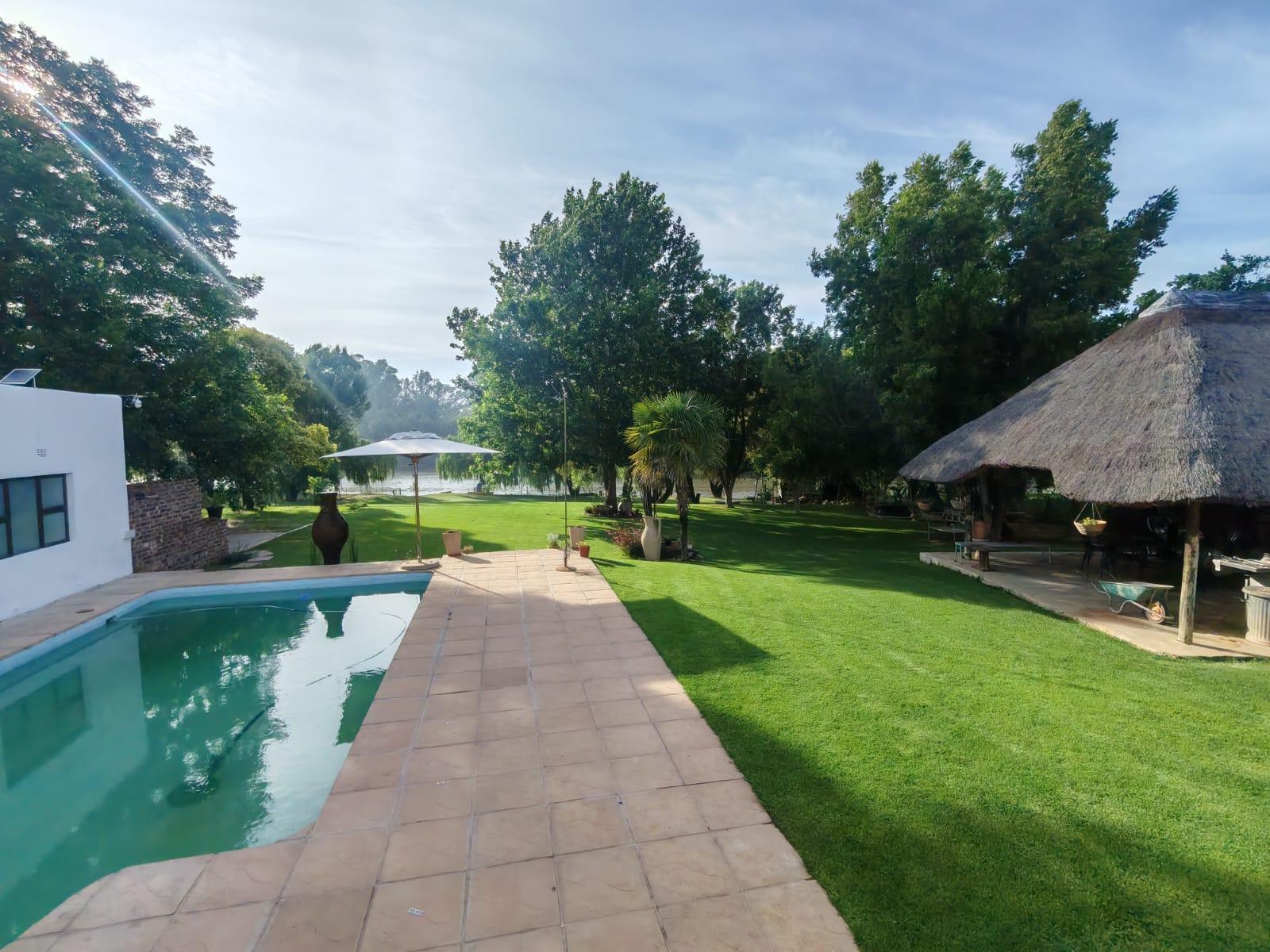
Mid-range accommodation in Free State farming country takes the form of established guesthouses in nearby towns or farm stays that have made a deliberate investment in better infrastructure. En-suite rooms, reliable hot water, a covered braai area, and a swimming pool are common features at this level. Several properties of this type serve both leisure visitors and the commercial traffic that passes through agricultural regions year-round, which means standards tend to be more consistent than at the most informal end of the market.
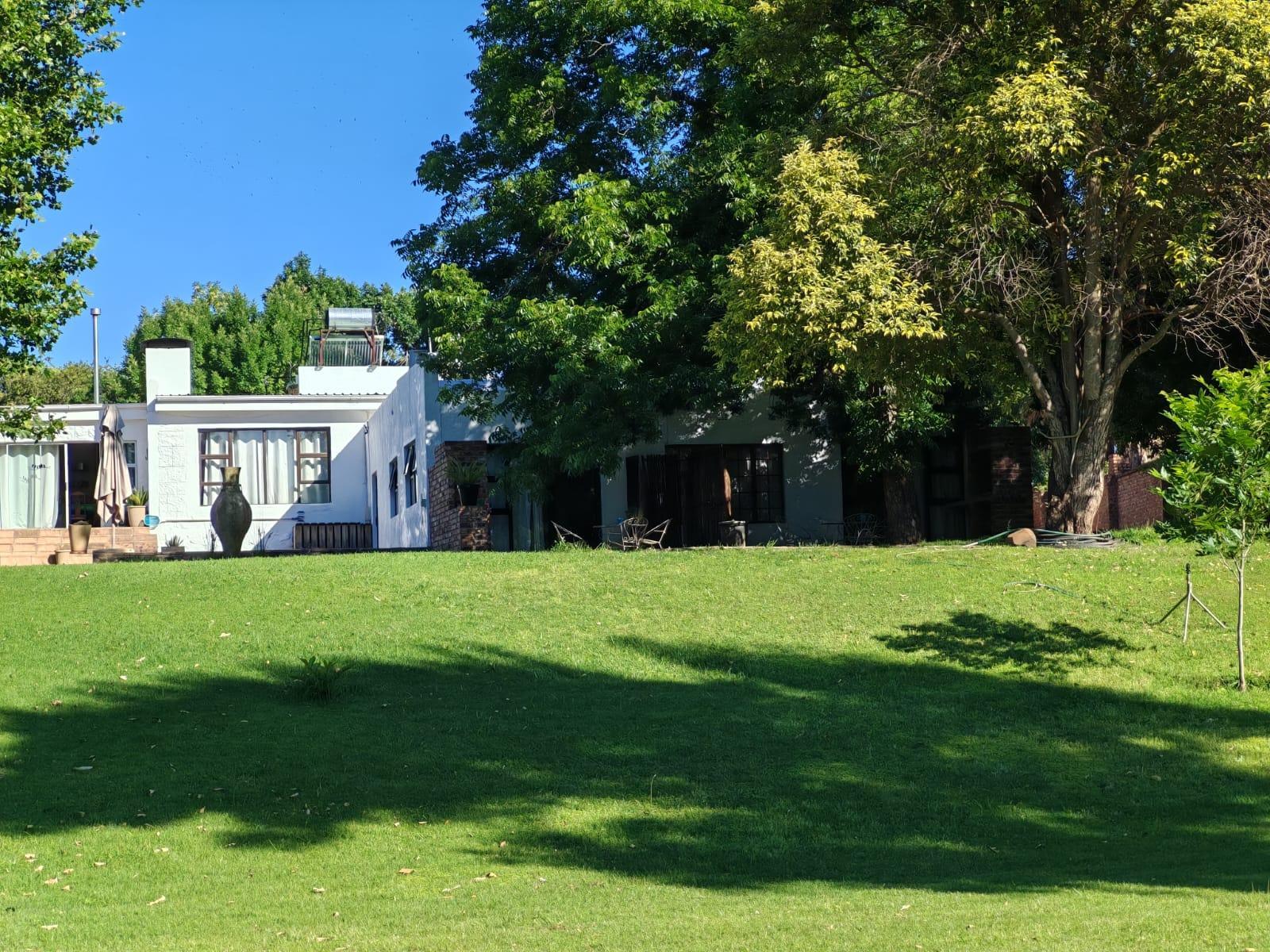
Upper-tier options exist within a broader driving radius. Game lodges and upscale working farm retreats with full-board dining and guided activities represent the ceiling of the rural market here. The particular draw of farm accommodation anywhere in this region is the landscape itself: views from a farmhouse stoep often stretch unbroken for several kilometres, and the absence of artificial light makes night skies considerably more visible than from any city.
In practical terms, accommodation for most visitors means staying in a nearby town and treating Geelblom as part of a broader rural itinerary rather than a self-contained destination with its own hospitality infrastructure. Booking in advance, and contacting hosts directly rather than through aggregators, remains the most reliable approach.
---
## Best Time to Visit Geelblom
The Free State interior follows a clearly seasonal climate, and timing a visit involves a practical trade-off between warmth and comfort. Summer, from November through February, brings daytime temperatures past 30°C and afternoon thunderstorms that build predictably each day, breaking in heavy downpours that temporarily cool the air before conditions reassert themselves. These storms are a reliable feature from December through February and can render unpaved tracks impassable for short periods.
Winter delivers a sharp contrast. From June through August, nights drop close to freezing and morning frost is possible on clear days. Days are dry, mild, and consistent, with stable travel conditions and firm roads throughout. The landscape is spare and brown during these months, with long unobstructed sightlines across grassland.
For most visitors, late April through early July offers the best balance: clear skies, cool but manageable temperatures, and dry roads. Autumn also coincides with maize and sunflower harvests on surrounding farms, adding activity to the agricultural landscape that makes the region feel more animated than during the quiet winter dormancy. Spring, from September through October, sees vegetation beginning to revive after the dry months and early grassland flowers appearing, though temperatures climb again quickly and the first storms of the summer cycle can arrive by November.
---
## Getting to Geelblom
Road travel is the only realistic way to reach Geelblom. The settlement sits in the northwestern Free State close to the Northern Cape border, approached via secondary roads through agricultural towns and open farming country. Planning fuel stops carefully is essential, as distances between service points in this region are significant and signage on minor roads can be sparse.
Kimberley, the Northern Cape capital, provides the closest airport with domestic connections to Johannesburg, Cape Town, and Durban. The drive from Kimberley to Geelblom takes roughly one and a half to two hours. Bloemfontein's airport is a further option; the drive from the Free State capital takes approximately two and a half hours. Both airports have national car rental counters. Welkom, about 80 kilometres to the southwest, is the nearest urban center of significant size but does not have commercial air connections.
No scheduled public transport serves Geelblom. Long-distance coach routes operate through larger towns on national roads, but reaching this settlement from any coach stop requires independent onward transport. A private vehicle is effectively essential for this journey.
Cell coverage is intermittent in rural stretches between towns, and some access roads in the area are unpaved. Downloading offline maps before setting out provides useful backup when data connectivity drops.
---
## Geelblom and Surrounding Areas
The settlements closest to Geelblom reflect the same agricultural character as the area itself. **Pholofolo**, 12 kilometres away, is a small rural community that provides basic services for farming families in the immediate vicinity. **Kokomeng**, at 15 kilometres, is a similarly compact settlement, oriented toward the workforce of surrounding smallholdings rather than toward any visitor economy. Neither functions as a destination in itself, but both illustrate the texture of rural settlement in this corner of the Free State.
**Hartswater**, 30 kilometres distant, is the practical hub of the region. The town developed as a service center for the Vaalharts Irrigation Scheme, one of the largest irrigation projects in South Africa, which converted semi-arid land into productive farmland capable of supporting cotton, groundnuts, pecan nuts, and wheat cultivation. The pecan industry in particular has expanded considerably in recent decades. Hartswater has fuel stations, supermarkets, hardware stores, and accommodation. It functions as the commercial anchor for a wide surrounding area, handling supply requirements that smaller settlements cannot meet.
**Tswedintlhe**, 36 kilometres from Geelblom, is a small settlement in the farming belt that spans the Free State and Northern Cape border zone, serving agricultural workers and local families. It shares the functional, non-tourism character of the communities closer to Geelblom.
**Ganspan**, 41 kilometres away, is a seasonal pan and one of the better-known birding sites in the Northern Cape. When water levels peak following summer rains, the pan attracts waterbirds in considerable numbers, including flamingos, pelicans, and a range of wader species. It is most productive from late summer through autumn. Sitting within the broader Harts River catchment, it offers a natural history dimension that contrasts with the predominantly agricultural character of the surrounding landscape, and a side trip from a Geelblom base makes good sense for anyone with an interest in ornithology.
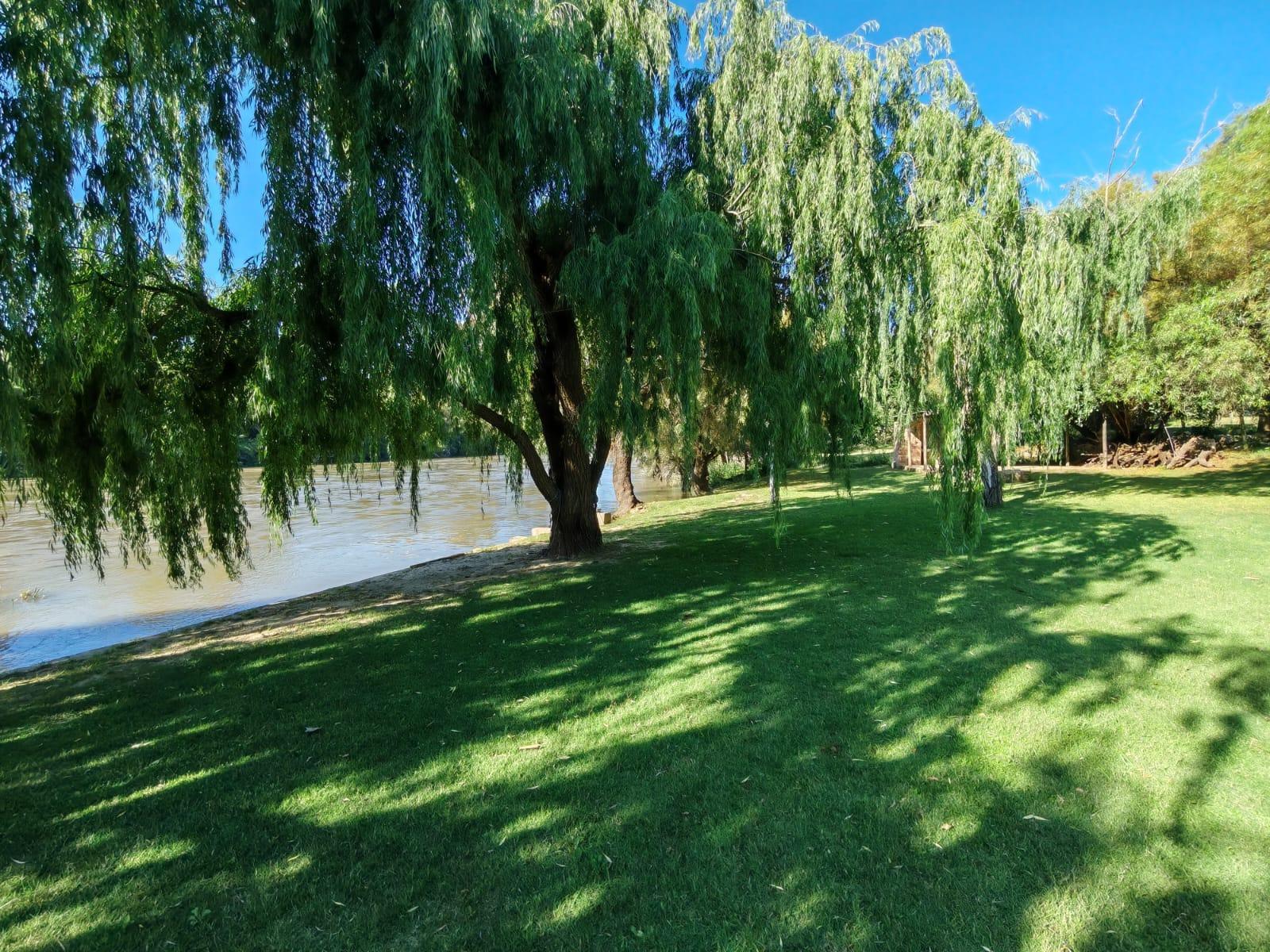
**Bankdrif**, at 42 kilometres, takes its Afrikaans name from the word for a river ford or crossing. The area reflects the character typical of riparian landscapes in the Northern Cape, where proximity to permanent water shapes both the vegetation and the farming activity, giving the immediate surroundings a different quality from the open grassland directly around Geelblom.
---
## Planning Your Stay
Formal booking platforms list few properties in the immediate Geelblom area. Direct contact, by phone or email, with farm accommodations and guesthouses in the surrounding region produces better results than online searches. Local tourism offices in nearby towns can sometimes identify properties that operate with no online presence at all, and a single phone inquiry can open options that no amount of internet searching would surface.
Confirming road conditions with your host before arrival is worth doing. Ask specifically whether the access route to the property involves unpaved stretches and whether there are any conditions that affect accessibility at certain times of year.
Self-catering is the most common arrangement in rural farm accommodation. Arriving with food supplies from a town with a supermarket is sensible, as there is no assumption of nearby restaurants or shops. Confirm what cooking facilities are available when booking.
Cash is worth carrying in reasonable quantities. Smaller rural properties may not have card payment infrastructure, and it is always better to clarify payment arrangements before arriving.
Peak demand falls during South African school holidays, particularly late June through July and the December to January summer break. During these periods, even modest rural accommodation can fill up weeks in advance. Outside these windows, availability is less constrained, though the limited number of properties in this area means last-minute bookings carry genuine risk year-round.

No properties are formally listed for Geelblom on major booking platforms at present, which reflects the settlement's scale rather than an absence of accommodation in the broader area. Rural Free State travel has long relied more on direct contact than on centralised booking infrastructure, and travelers prepared to reach out to local farms and guesthouses directly will find options that never appear in online searches. These arrangements are often better discovered through a phone call to the nearest town's tourism office than through any aggregator search.
At the budget end of the spectrum, farm rooms and self-catering cottages attached to working agricultural properties are the typical offering. These are practical arrangements: a bed, a functional bathroom, and access to basic cooking facilities. The value lies in the setting and the directness of the experience rather than in any provision of hotel-standard amenities. Travelers who want affordable shelter while moving through the region will find these options adequate for their purpose.
Mid-range accommodation in Free State farming country takes the form of established guesthouses in nearby towns or farm stays that have made a deliberate investment in better infrastructure. En-suite rooms, reliable hot water, a covered braai area, and a swimming pool are common features at this level. Several properties of this type serve both leisure visitors and the commercial traffic that passes through agricultural regions year-round, which means standards tend to be more consistent than at the most informal end of the market.
Upper-tier options exist within a broader driving radius. Game lodges and upscale working farm retreats with full-board dining and guided activities represent the ceiling of the rural market here. The particular draw of farm accommodation anywhere in this region is the landscape itself: views from a farmhouse stoep often stretch unbroken for several kilometres, and the absence of artificial light makes night skies considerably more visible than from any city.
In practical terms, accommodation for most visitors means staying in a nearby town and treating Geelblom as part of a broader rural itinerary rather than a self-contained destination with its own hospitality infrastructure. Booking in advance, and contacting hosts directly rather than through aggregators, remains the most reliable approach.
---
## Best Time to Visit Geelblom
The Free State interior follows a clearly seasonal climate, and timing a visit involves a practical trade-off between warmth and comfort. Summer, from November through February, brings daytime temperatures past 30°C and afternoon thunderstorms that build predictably each day, breaking in heavy downpours that temporarily cool the air before conditions reassert themselves. These storms are a reliable feature from December through February and can render unpaved tracks impassable for short periods.
Winter delivers a sharp contrast. From June through August, nights drop close to freezing and morning frost is possible on clear days. Days are dry, mild, and consistent, with stable travel conditions and firm roads throughout. The landscape is spare and brown during these months, with long unobstructed sightlines across grassland.
For most visitors, late April through early July offers the best balance: clear skies, cool but manageable temperatures, and dry roads. Autumn also coincides with maize and sunflower harvests on surrounding farms, adding activity to the agricultural landscape that makes the region feel more animated than during the quiet winter dormancy. Spring, from September through October, sees vegetation beginning to revive after the dry months and early grassland flowers appearing, though temperatures climb again quickly and the first storms of the summer cycle can arrive by November.
---
## Getting to Geelblom
Road travel is the only realistic way to reach Geelblom. The settlement sits in the northwestern Free State close to the Northern Cape border, approached via secondary roads through agricultural towns and open farming country. Planning fuel stops carefully is essential, as distances between service points in this region are significant and signage on minor roads can be sparse.
Kimberley, the Northern Cape capital, provides the closest airport with domestic connections to Johannesburg, Cape Town, and Durban. The drive from Kimberley to Geelblom takes roughly one and a half to two hours. Bloemfontein's airport is a further option; the drive from the Free State capital takes approximately two and a half hours. Both airports have national car rental counters. Welkom, about 80 kilometres to the southwest, is the nearest urban center of significant size but does not have commercial air connections.
No scheduled public transport serves Geelblom. Long-distance coach routes operate through larger towns on national roads, but reaching this settlement from any coach stop requires independent onward transport. A private vehicle is effectively essential for this journey.
Cell coverage is intermittent in rural stretches between towns, and some access roads in the area are unpaved. Downloading offline maps before setting out provides useful backup when data connectivity drops.
---
## Geelblom and Surrounding Areas
The settlements closest to Geelblom reflect the same agricultural character as the area itself. **Pholofolo**, 12 kilometres away, is a small rural community that provides basic services for farming families in the immediate vicinity. **Kokomeng**, at 15 kilometres, is a similarly compact settlement, oriented toward the workforce of surrounding smallholdings rather than toward any visitor economy. Neither functions as a destination in itself, but both illustrate the texture of rural settlement in this corner of the Free State.
**Hartswater**, 30 kilometres distant, is the practical hub of the region. The town developed as a service center for the Vaalharts Irrigation Scheme, one of the largest irrigation projects in South Africa, which converted semi-arid land into productive farmland capable of supporting cotton, groundnuts, pecan nuts, and wheat cultivation. The pecan industry in particular has expanded considerably in recent decades. Hartswater has fuel stations, supermarkets, hardware stores, and accommodation. It functions as the commercial anchor for a wide surrounding area, handling supply requirements that smaller settlements cannot meet.
**Tswedintlhe**, 36 kilometres from Geelblom, is a small settlement in the farming belt that spans the Free State and Northern Cape border zone, serving agricultural workers and local families. It shares the functional, non-tourism character of the communities closer to Geelblom.
**Ganspan**, 41 kilometres away, is a seasonal pan and one of the better-known birding sites in the Northern Cape. When water levels peak following summer rains, the pan attracts waterbirds in considerable numbers, including flamingos, pelicans, and a range of wader species. It is most productive from late summer through autumn. Sitting within the broader Harts River catchment, it offers a natural history dimension that contrasts with the predominantly agricultural character of the surrounding landscape, and a side trip from a Geelblom base makes good sense for anyone with an interest in ornithology.
**Bankdrif**, at 42 kilometres, takes its Afrikaans name from the word for a river ford or crossing. The area reflects the character typical of riparian landscapes in the Northern Cape, where proximity to permanent water shapes both the vegetation and the farming activity, giving the immediate surroundings a different quality from the open grassland directly around Geelblom.
---
## Planning Your Stay
Formal booking platforms list few properties in the immediate Geelblom area. Direct contact, by phone or email, with farm accommodations and guesthouses in the surrounding region produces better results than online searches. Local tourism offices in nearby towns can sometimes identify properties that operate with no online presence at all, and a single phone inquiry can open options that no amount of internet searching would surface.
Confirming road conditions with your host before arrival is worth doing. Ask specifically whether the access route to the property involves unpaved stretches and whether there are any conditions that affect accessibility at certain times of year.
Self-catering is the most common arrangement in rural farm accommodation. Arriving with food supplies from a town with a supermarket is sensible, as there is no assumption of nearby restaurants or shops. Confirm what cooking facilities are available when booking.
Cash is worth carrying in reasonable quantities. Smaller rural properties may not have card payment infrastructure, and it is always better to clarify payment arrangements before arriving.
Peak demand falls during South African school holidays, particularly late June through July and the December to January summer break. During these periods, even modest rural accommodation can fill up weeks in advance. Outside these windows, availability is less constrained, though the limited number of properties in this area means last-minute bookings carry genuine risk year-round.
Geelblom Kaart
Nabygeleë Bestemmings
Blaai Deur Alle Geelblom Akkommodasie
Bekyk al 0 akkommodasie-opsies in Geelblom met foto's, pryse en beskikbaarheid.
Blaai Deur Alle Akkommodasie