Mazeppa Bay Reis- & Akkommodasiegids
Jou volledige gids om Mazeppa Bay, Suid-Afrika te besoek.
Mazeppa Bay features expansive beaches and coastal landscapes that draw visitors for relaxation and exploration. The area includes estuaries and forests, supporting a variety of wildlife. It serves as a base for outdoor pursuits in a less crowded setting.
## Accommodation in Mazeppa Bay
At present, no properties in Mazeppa Bay appear on major accommodation booking platforms, and nightly rates are not publicly advertised. That reflects a pattern common to remote Wild Coast destinations, where guesthouses and cottages are often booked directly by phone, through local tourism contacts, or by word of mouth rather than through centralised listing sites. Mazeppa Bay draws visitors looking for a quieter coastal experience, and the accommodation that exists here tends to reflect that character rather than compete with the facilities of mainstream beach resorts.
At the budget end, simple self-catering cottages are the most typical option. These tend to offer basic kitchen facilities, outdoor space, and easy access to the beach or the hillside paths that wind above the bay. They suit travellers who spend most of their time outdoors and are not looking for hotel-style services.
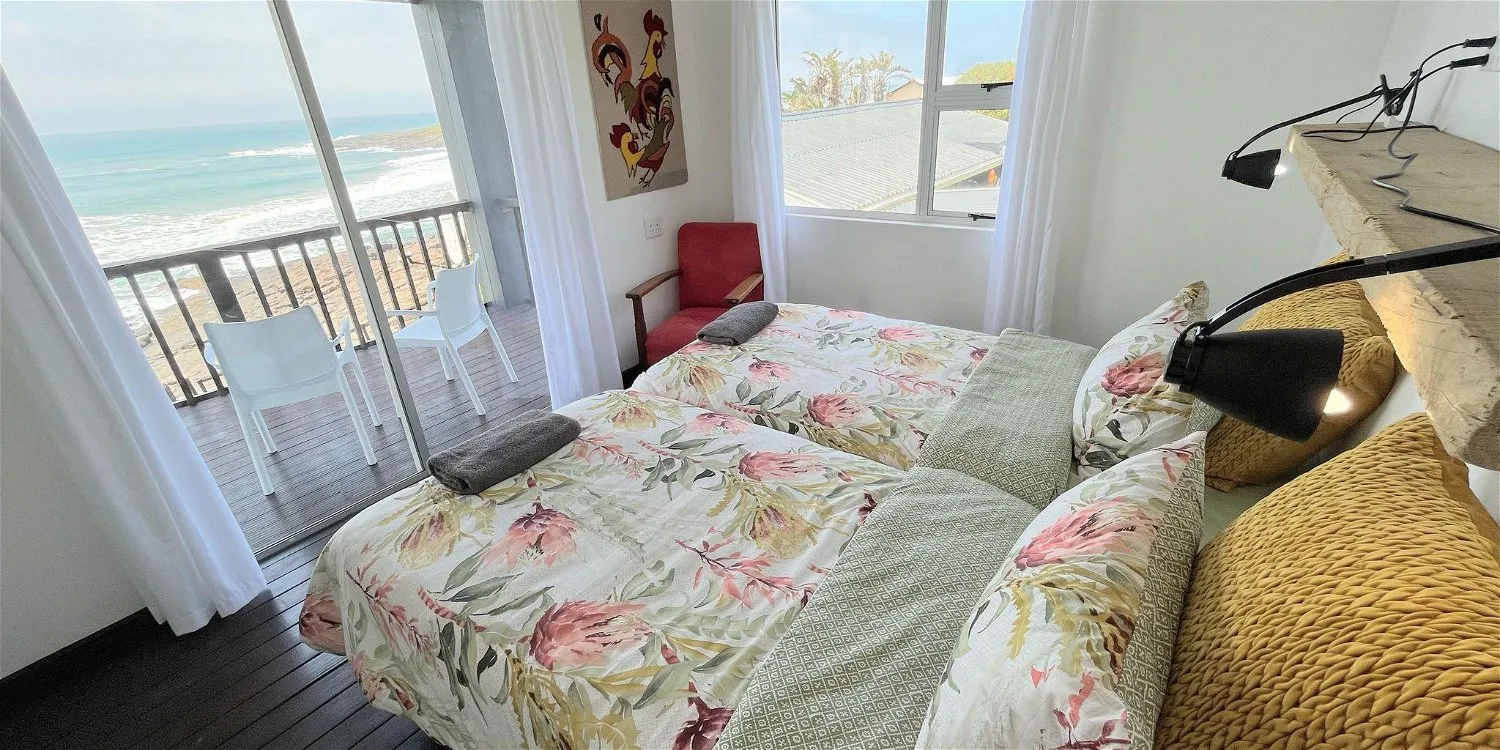
Small guesthouses and family-run lodges fill the mid-range tier. Some have been under the same ownership for years, with rooms that typically include en-suite bathrooms and, where the position allows, views toward the water. Hosts here often carry detailed knowledge of local tides, the best fishing spots, and walking routes through the dune vegetation. That kind of firsthand knowledge is genuinely useful in a place where terrain and conditions shift quickly with the weather.
For groups or families, a self-contained rental house is usually the most practical choice. These properties typically offer multiple bedrooms, a full kitchen, and outdoor braai space. Splitting costs across several people makes this tier work well financially, and the extra space matters considerably for stays longer than two or three nights.
Finding accommodation online requires patience. Broadening a search to include nearby towns alongside Mazeppa Bay often surfaces more results, and contacting the Eastern Cape tourism board or local community representatives can also point toward options that would not appear on standard booking platforms.
---
## Best Time to Visit Mazeppa Bay
Mazeppa Bay follows the climate pattern of the Eastern Cape Wild Coast: warm, humid summers and mild, drier winters. The warmest sea temperatures fall between November and February, when conditions favour swimming, kayaking, and extended time on the beach. Rainfall peaks in summer, but most arrives in afternoon thunderstorms that pass quickly and rarely disrupt a full day.
From June to August, rainfall drops significantly and the water cools. Walking the dune paths and grassland trails is easier in these drier conditions, and the bay feels considerably quieter. Fishing is possible year-round, though many local anglers consider the cooler months more productive for certain species along this stretch of coast.
Peak visitor numbers coincide with South African school holidays: the long summer break running from December into January, and the shorter July break. Accommodation fills quickly during these periods and the beach is noticeably more crowded. Shoulder months, particularly April, May, September, and October, offer steadier weather without the holiday pressure.
September and October reward birdwatchers especially, as migrant activity along the coast peaks and the surrounding vegetation grows actively. Autumn, from March into May, brings reduced humidity after the summer rains and remains warm enough for comfortable beach days. For those travelling primarily to walk or explore the area on foot, this period is generally preferable to the height of summer.
---
## Getting to Mazeppa Bay
Most visitors arrive by private vehicle. The closest commercial airport is in East London, roughly 100 kilometres to the south, with regular scheduled services from Johannesburg, Cape Town, and Durban. From the airport, driving north on the N2 takes around 90 minutes before turning onto regional roads heading toward the coast.
From Mthatha, approximately 120 kilometres to the north, the approach passes through Elliotdale and then down to the shore through communal farming land. Road speeds on this stretch are generally slow, with livestock, pedestrians, and variable tar surfaces throughout. The final approach to the bay involves unpaved road, and conditions can deteriorate noticeably after heavy rain. A vehicle with reasonable ground clearance handles these sections more comfortably than a standard low-clearance sedan, though the route is manageable in dry conditions.
No regular bus or minibus taxi service runs to Mazeppa Bay itself. Travellers using public transport would typically reach a larger coastal town and arrange private onward transport from there. Fuel is not available at the bay, so filling the tank before the last leg of the journey is essential. Mobile coverage is patchy along this part of the coast, and downloading offline maps before departure is a practical step rather than an optional precaution.
---
## Mazeppa Bay and Surrounding Areas
**Maxambeni**, one kilometre away, is an immediate residential neighbour to the bay. A short walk there offers the closest point of contact with everyday community life in the area, and it gives a sense of the people and routines that have shaped the bay's character over generations.
**Gqiba**, 21 kilometres along the coast, occupies terrain typical of the Wild Coast: river mouths, short-grass bluffs, and fishing communities that have long depended on the sea. The area rewards visitors comfortable with rural roads and offers a stretch of coastline that sees considerably fewer day-trippers than the more accessible beaches to the south.
**Ngqantsingana**, 24 kilometres out, sits within the same coastal belt as Gqiba. The landscape between here and Mazeppa Bay is characterised by hills dropping steeply toward the shore, and the drive through this terrain is part of the experience for travellers who are not in a hurry.
**Morgans Bay**, 38 kilometres south, is among the most practical options for a day trip. The lagoon is calm and suitable for relaxed swimming, the beach draws both surf anglers and families, and a pub-style restaurant that has served the village for many years provides a dependable lunch stop. The drive takes roughly an hour and combines tarred and gravel sections.
**Gxarha**, 39 kilometres away, marks the mouth of the Gxarha River and carries considerable historical weight. The site is directly tied to the 1856 Nongqawuse prophecy, in which a vision said to have occurred near this river mouth led to the Xhosa cattle-killing and a famine that caused widespread devastation across the region. The landscape is largely unchanged, making it a destination worth spending real time at rather than simply passing through.
**Haga Haga**, 49 kilometres to the south, is among the more developed settlements along this stretch. The beach is wide and exposed, popular with surfers and strong swimmers, and the rock pools at low tide are good for exploring with children. A hotel that has operated continuously for decades serves as a focal point for meals if a day trip extends past sunset.
---
## Planning Your Stay
Accommodation in Mazeppa Bay is not easy to book through standard online channels. Contacting guesthouses directly by phone, well before your planned arrival, is more reliable than waiting for platform listings to update. For peak periods such as December and July, reaching out two to three months in advance gives a realistic chance of securing something suitable.
Before confirming a booking, ask specifically about road access. Properties reached by a long gravel track, or across a river crossing, can become inaccessible after sustained rainfall. It is also worth checking whether the property runs on grid power or a generator, and whether backup water storage is in place. Both factors are relevant in an area where infrastructure is not always consistent.
Mazeppa Bay has no shops or food outlets on site. Arriving with enough provisions for the full duration of the stay is a practical necessity, not a preference. Stocking up in East London before heading north is more reliable than depending on smaller towns along the route, where stock can be limited.
If fishing forms part of the plan, check current regulations before leaving home. Certain species and zones along this stretch of coast are subject to seasonal or permanent restrictions, and a brief conversation with your host on arrival will clarify what is currently permitted under local rules.

At present, no properties in Mazeppa Bay appear on major accommodation booking platforms, and nightly rates are not publicly advertised. That reflects a pattern common to remote Wild Coast destinations, where guesthouses and cottages are often booked directly by phone, through local tourism contacts, or by word of mouth rather than through centralised listing sites. Mazeppa Bay draws visitors looking for a quieter coastal experience, and the accommodation that exists here tends to reflect that character rather than compete with the facilities of mainstream beach resorts.
At the budget end, simple self-catering cottages are the most typical option. These tend to offer basic kitchen facilities, outdoor space, and easy access to the beach or the hillside paths that wind above the bay. They suit travellers who spend most of their time outdoors and are not looking for hotel-style services.
Small guesthouses and family-run lodges fill the mid-range tier. Some have been under the same ownership for years, with rooms that typically include en-suite bathrooms and, where the position allows, views toward the water. Hosts here often carry detailed knowledge of local tides, the best fishing spots, and walking routes through the dune vegetation. That kind of firsthand knowledge is genuinely useful in a place where terrain and conditions shift quickly with the weather.
For groups or families, a self-contained rental house is usually the most practical choice. These properties typically offer multiple bedrooms, a full kitchen, and outdoor braai space. Splitting costs across several people makes this tier work well financially, and the extra space matters considerably for stays longer than two or three nights.
Finding accommodation online requires patience. Broadening a search to include nearby towns alongside Mazeppa Bay often surfaces more results, and contacting the Eastern Cape tourism board or local community representatives can also point toward options that would not appear on standard booking platforms.
---
## Best Time to Visit Mazeppa Bay
Mazeppa Bay follows the climate pattern of the Eastern Cape Wild Coast: warm, humid summers and mild, drier winters. The warmest sea temperatures fall between November and February, when conditions favour swimming, kayaking, and extended time on the beach. Rainfall peaks in summer, but most arrives in afternoon thunderstorms that pass quickly and rarely disrupt a full day.
From June to August, rainfall drops significantly and the water cools. Walking the dune paths and grassland trails is easier in these drier conditions, and the bay feels considerably quieter. Fishing is possible year-round, though many local anglers consider the cooler months more productive for certain species along this stretch of coast.
Peak visitor numbers coincide with South African school holidays: the long summer break running from December into January, and the shorter July break. Accommodation fills quickly during these periods and the beach is noticeably more crowded. Shoulder months, particularly April, May, September, and October, offer steadier weather without the holiday pressure.
September and October reward birdwatchers especially, as migrant activity along the coast peaks and the surrounding vegetation grows actively. Autumn, from March into May, brings reduced humidity after the summer rains and remains warm enough for comfortable beach days. For those travelling primarily to walk or explore the area on foot, this period is generally preferable to the height of summer.
---
## Getting to Mazeppa Bay
Most visitors arrive by private vehicle. The closest commercial airport is in East London, roughly 100 kilometres to the south, with regular scheduled services from Johannesburg, Cape Town, and Durban. From the airport, driving north on the N2 takes around 90 minutes before turning onto regional roads heading toward the coast.
From Mthatha, approximately 120 kilometres to the north, the approach passes through Elliotdale and then down to the shore through communal farming land. Road speeds on this stretch are generally slow, with livestock, pedestrians, and variable tar surfaces throughout. The final approach to the bay involves unpaved road, and conditions can deteriorate noticeably after heavy rain. A vehicle with reasonable ground clearance handles these sections more comfortably than a standard low-clearance sedan, though the route is manageable in dry conditions.
No regular bus or minibus taxi service runs to Mazeppa Bay itself. Travellers using public transport would typically reach a larger coastal town and arrange private onward transport from there. Fuel is not available at the bay, so filling the tank before the last leg of the journey is essential. Mobile coverage is patchy along this part of the coast, and downloading offline maps before departure is a practical step rather than an optional precaution.
---
## Mazeppa Bay and Surrounding Areas
**Maxambeni**, one kilometre away, is an immediate residential neighbour to the bay. A short walk there offers the closest point of contact with everyday community life in the area, and it gives a sense of the people and routines that have shaped the bay's character over generations.
**Gqiba**, 21 kilometres along the coast, occupies terrain typical of the Wild Coast: river mouths, short-grass bluffs, and fishing communities that have long depended on the sea. The area rewards visitors comfortable with rural roads and offers a stretch of coastline that sees considerably fewer day-trippers than the more accessible beaches to the south.
**Ngqantsingana**, 24 kilometres out, sits within the same coastal belt as Gqiba. The landscape between here and Mazeppa Bay is characterised by hills dropping steeply toward the shore, and the drive through this terrain is part of the experience for travellers who are not in a hurry.
**Morgans Bay**, 38 kilometres south, is among the most practical options for a day trip. The lagoon is calm and suitable for relaxed swimming, the beach draws both surf anglers and families, and a pub-style restaurant that has served the village for many years provides a dependable lunch stop. The drive takes roughly an hour and combines tarred and gravel sections.
**Gxarha**, 39 kilometres away, marks the mouth of the Gxarha River and carries considerable historical weight. The site is directly tied to the 1856 Nongqawuse prophecy, in which a vision said to have occurred near this river mouth led to the Xhosa cattle-killing and a famine that caused widespread devastation across the region. The landscape is largely unchanged, making it a destination worth spending real time at rather than simply passing through.
**Haga Haga**, 49 kilometres to the south, is among the more developed settlements along this stretch. The beach is wide and exposed, popular with surfers and strong swimmers, and the rock pools at low tide are good for exploring with children. A hotel that has operated continuously for decades serves as a focal point for meals if a day trip extends past sunset.
---
## Planning Your Stay
Accommodation in Mazeppa Bay is not easy to book through standard online channels. Contacting guesthouses directly by phone, well before your planned arrival, is more reliable than waiting for platform listings to update. For peak periods such as December and July, reaching out two to three months in advance gives a realistic chance of securing something suitable.
Before confirming a booking, ask specifically about road access. Properties reached by a long gravel track, or across a river crossing, can become inaccessible after sustained rainfall. It is also worth checking whether the property runs on grid power or a generator, and whether backup water storage is in place. Both factors are relevant in an area where infrastructure is not always consistent.
Mazeppa Bay has no shops or food outlets on site. Arriving with enough provisions for the full duration of the stay is a practical necessity, not a preference. Stocking up in East London before heading north is more reliable than depending on smaller towns along the route, where stock can be limited.
If fishing forms part of the plan, check current regulations before leaving home. Certain species and zones along this stretch of coast are subject to seasonal or permanent restrictions, and a brief conversation with your host on arrival will clarify what is currently permitted under local rules.
Mazeppa Bay Kaart
Nabygeleë Bestemmings
Blaai Deur Alle Mazeppa Bay Akkommodasie
Bekyk al 0 akkommodasie-opsies in Mazeppa Bay met foto's, pryse en beskikbaarheid.
Blaai Deur Alle Akkommodasie