Tokio Reis- & Akkommodasiegids
Jou volledige gids om Tokio, Suid-Afrika te besoek.
Tokio is a small rural settlement in Limpopo Province, positioned in the far northeastern reaches of South Africa near the Kruger National Park. The area serves as a quiet base for visitors exploring the surrounding bushveld and wildlife reserves.
## Accommodation in Tokio
Tokio's accommodation market is small by any measure. Currently, no properties are listed through standard online booking platforms, which means finding somewhere to stay requires direct outreach to operators rather than a quick search-and-book process. Accommodation does exist in the area, but it is oriented toward travellers already comfortable with rural settings and independent travel.
At the budget end, self-catering cottages on working farms represent the most common option. These properties typically provide basic kitchen facilities, outdoor braai areas, and a direct experience of lowveld farm life, with guests largely independent from check-in onward. Rates are rarely published online and are usually arranged through a phone call or email inquiry.
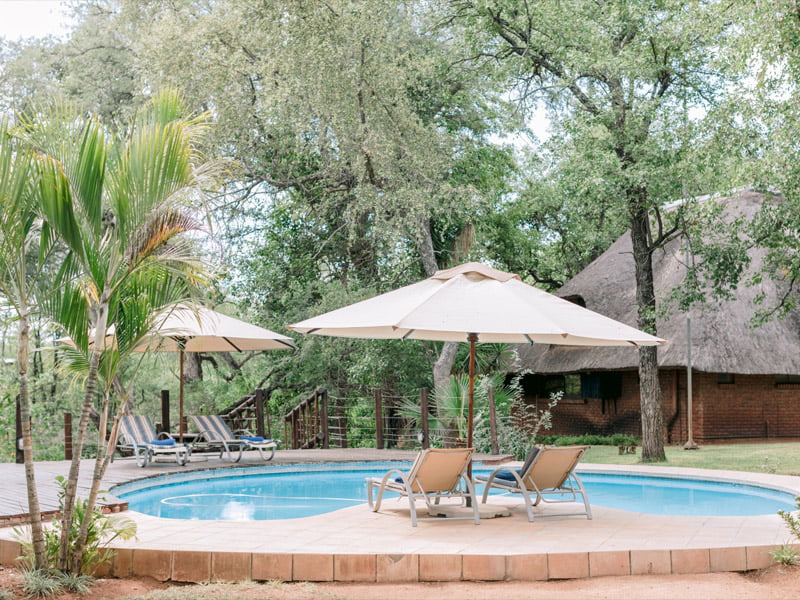
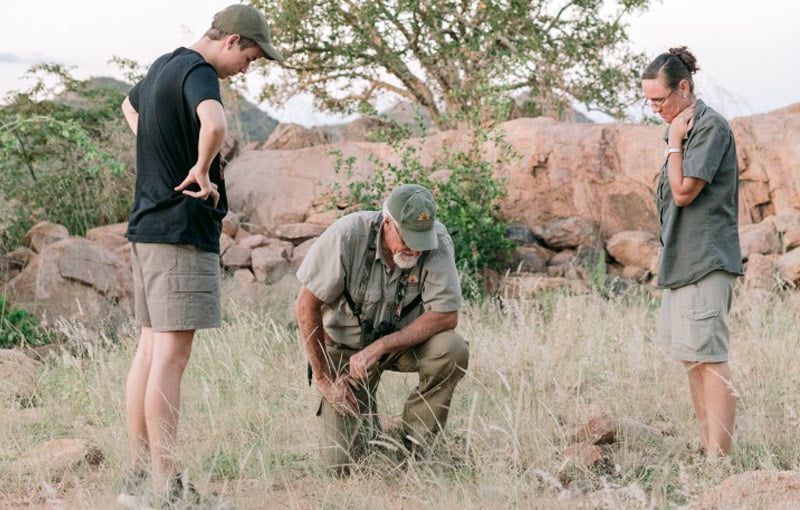
Mid-range options lean toward small owner-operated lodges where a room rate may include breakfast and access to a swimming pool, which becomes a practical amenity in high temperatures. Some properties at this tier maintain relationships with local guides and can arrange game drives or point guests toward nearby reserve routes. The on-the-ground knowledge at smaller owner-run operations is frequently one of their strongest features.
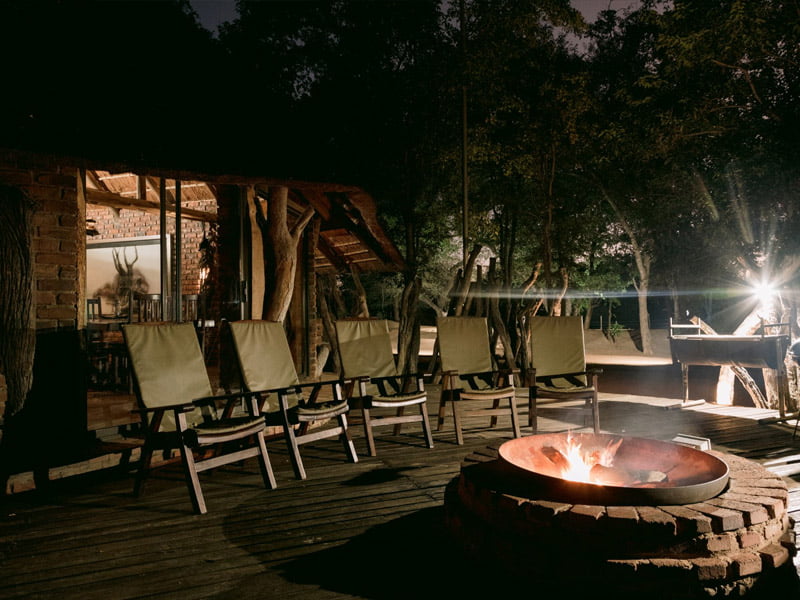
Upper-tier choices in and around Tokio are generally private retreats on larger landholdings, sometimes with access to adjoining fenced game areas. These are not resort-style properties, but they offer a more personal bush experience than branded lodges in higher-traffic safari corridors. Guests pay primarily for seclusion and direct bush access rather than formal amenities.
Because online listings are sparse, the most practical starting point is to contact accommodation listing services covering the Limpopo lowveld or to reach out to local tourism boards in the nearest major town. Guest farms in particular rarely advertise beyond word of mouth or a basic web presence, and they may have availability even when online searches return nothing.
---
## Best Time to Visit Tokio
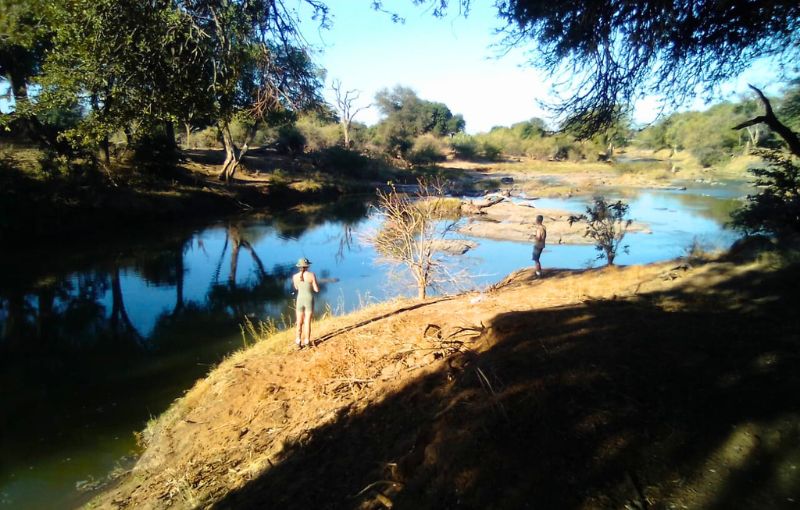
The dry winter period from May to September draws the most visitors to this part of Limpopo. Rainfall is minimal, daytime temperatures are moderate, and reduced vegetation makes wildlife far easier to spot around the Olifants River corridor and seasonal waterholes. Early mornings in June and July can drop to near-single-digit temperatures, so packing a warm layer is worthwhile despite the subtropical latitude.
October and November bring rising heat and the first rains. Migratory bird species begin arriving during this transition, making it a productive window for birders. Afternoon thunderstorms become increasingly frequent by mid-November, and the heat climbs sharply compared to the cooler months.
December through March is the hottest stretch, with daytime temperatures regularly exceeding 35 degrees Celsius and heavy afternoon downpours. The landscape turns dramatically green and wildlife disperses more widely as water sources multiply, making game sightings less predictable. Timing outdoor activities around the afternoon storms and heat peaks becomes a daily consideration.
Malaria is a year-round consideration in this part of Limpopo, classified as low to moderate risk. The risk is higher in the wet summer months, which is an additional factor for many visitors choosing the drier season. Consult a medical professional about prophylaxis before departure regardless of when you plan to travel.
---
## Getting to Tokio
Tokio sits roughly 60 kilometres from Phalaborwa, the nearest town with comprehensive services including fuel stations, supermarkets, a hospital, and mechanical workshops. Phalaborwa has a small commercial airport served by scheduled flights from Johannesburg, with the journey taking under two hours. Car hire is available at the airport, which makes this corner of Limpopo considerably more accessible than comparable rural areas that require a full day's drive from a major centre.
Drivers from Johannesburg should budget five to six hours, heading northeast along the N1 before turning toward the lowveld via the R71 corridor through Tzaneen. Main roads in this part of Limpopo are tarred and generally in reasonable condition. The final stretches into Tokio and to outlying farm properties typically involve gravel roads, so a vehicle with adequate ground clearance is a more sensible choice than a low-slung city car.
Once in the area, a private vehicle is not just convenient but essential. No public transport serves the Tokio district, and ride-sharing or metered taxi services do not operate here. For visitors planning to access Kruger National Park, both the Phalaborwa gate and the Orpen gate are within reasonable driving range, with routes well-signposted from the main roads. Most guests plan Kruger days around an early morning departure.
---
## Tokio and Surrounding Areas
The settlements within driving range of Tokio are predominantly rural communities set within the mopane woodland and agricultural land of the Limpopo lowveld. None are packaged tourist destinations, but each offers context for understanding the region and can complement a stay in Tokio for travellers inclined to explore beyond the game reserve boundaries.
**Grootpan**, 33 kilometres away, takes its name from the flat, depression-like terrain of the area. Seasonal pans in this part of Limpopo accumulate water after rain and attract waterbirds and wildlife during and after the wet season. The surrounding land is primarily agricultural, giving Grootpan a working farming character distinct from the more visitor-oriented areas further east.
**Ga-rakwele**, at 42 kilometres, is a village settlement where community life reflects the broader rural pattern of the Limpopo interior: small-scale farming, tight-knit local population, and an economy that interacts with the conservation zones defining the wider region. Travellers passing through gain a more grounded sense of the human geography alongside the wildlife corridors.
**Tlhonasedimong** (48km) and **Ga-mabelebele** (49km) are closely spaced communities at roughly the same distance from Tokio. Both are small and quiet, and the road between them and Tokio passes through open lowveld terrain that gives a clear impression of the scale and flatness of this part of Limpopo.
**Hananwa**, 67 kilometres out, is associated with the Hananwa people, a Sotho-speaking community with a long-established presence in the Blouberg area to the north. The Blouberg region is known for its rugged mountainous terrain and the cultural history connected to the Hananwa, making this direction an option for travellers wanting to see a distinctly different face of Limpopo beyond the flat bushveld.
**Ga-mampote** at 71 kilometres sits at the outer edge of convenient day-trip range. The route there shifts gradually through changing vegetation and landscape, and the drive itself provides a reasonable cross-section of rural Limpopo for travellers with time to spare.
---
## Planning Your Stay
Tokio is not well-integrated into mainstream booking platforms, so advance planning matters considerably more here than in higher-traffic destinations. The peak season from May through September fills regional accommodation quickly, particularly around South African school holiday windows in July and September. Contacting properties directly rather than relying on platform availability calendars gives a more accurate picture of what is actually open.
Before confirming any booking, it is worth asking a few practical questions specific to remote lowveld properties: whether the water supply is grid-fed or borehole-based, whether electricity relies on solar and generator systems rather than the municipal grid, and what the road conditions are like on the final approach. These details matter and are not always disclosed upfront.
Comprehensive travel insurance is advisable, covering both medical evacuation and vehicle breakdown. Emergency services and hospital facilities are based in town, and response times from remote farm locations can be substantial. Smaller properties in this area commonly prefer cash payment or direct bank transfer over card transactions, so arriving with sufficient cash is standard practice.
Mobile signal is inconsistent outside of the main town area. Downloading offline maps and saving key contact numbers, including accommodation, medical services, and roadside assistance, before leaving tarred roads is a practical step rather than an optional precaution.

Tokio's accommodation market is small by any measure. Currently, no properties are listed through standard online booking platforms, which means finding somewhere to stay requires direct outreach to operators rather than a quick search-and-book process. Accommodation does exist in the area, but it is oriented toward travellers already comfortable with rural settings and independent travel.
At the budget end, self-catering cottages on working farms represent the most common option. These properties typically provide basic kitchen facilities, outdoor braai areas, and a direct experience of lowveld farm life, with guests largely independent from check-in onward. Rates are rarely published online and are usually arranged through a phone call or email inquiry.
Mid-range options lean toward small owner-operated lodges where a room rate may include breakfast and access to a swimming pool, which becomes a practical amenity in high temperatures. Some properties at this tier maintain relationships with local guides and can arrange game drives or point guests toward nearby reserve routes. The on-the-ground knowledge at smaller owner-run operations is frequently one of their strongest features.
Upper-tier choices in and around Tokio are generally private retreats on larger landholdings, sometimes with access to adjoining fenced game areas. These are not resort-style properties, but they offer a more personal bush experience than branded lodges in higher-traffic safari corridors. Guests pay primarily for seclusion and direct bush access rather than formal amenities.
Because online listings are sparse, the most practical starting point is to contact accommodation listing services covering the Limpopo lowveld or to reach out to local tourism boards in the nearest major town. Guest farms in particular rarely advertise beyond word of mouth or a basic web presence, and they may have availability even when online searches return nothing.
---
## Best Time to Visit Tokio
The dry winter period from May to September draws the most visitors to this part of Limpopo. Rainfall is minimal, daytime temperatures are moderate, and reduced vegetation makes wildlife far easier to spot around the Olifants River corridor and seasonal waterholes. Early mornings in June and July can drop to near-single-digit temperatures, so packing a warm layer is worthwhile despite the subtropical latitude.
October and November bring rising heat and the first rains. Migratory bird species begin arriving during this transition, making it a productive window for birders. Afternoon thunderstorms become increasingly frequent by mid-November, and the heat climbs sharply compared to the cooler months.
December through March is the hottest stretch, with daytime temperatures regularly exceeding 35 degrees Celsius and heavy afternoon downpours. The landscape turns dramatically green and wildlife disperses more widely as water sources multiply, making game sightings less predictable. Timing outdoor activities around the afternoon storms and heat peaks becomes a daily consideration.
Malaria is a year-round consideration in this part of Limpopo, classified as low to moderate risk. The risk is higher in the wet summer months, which is an additional factor for many visitors choosing the drier season. Consult a medical professional about prophylaxis before departure regardless of when you plan to travel.
---
## Getting to Tokio
Tokio sits roughly 60 kilometres from Phalaborwa, the nearest town with comprehensive services including fuel stations, supermarkets, a hospital, and mechanical workshops. Phalaborwa has a small commercial airport served by scheduled flights from Johannesburg, with the journey taking under two hours. Car hire is available at the airport, which makes this corner of Limpopo considerably more accessible than comparable rural areas that require a full day's drive from a major centre.
Drivers from Johannesburg should budget five to six hours, heading northeast along the N1 before turning toward the lowveld via the R71 corridor through Tzaneen. Main roads in this part of Limpopo are tarred and generally in reasonable condition. The final stretches into Tokio and to outlying farm properties typically involve gravel roads, so a vehicle with adequate ground clearance is a more sensible choice than a low-slung city car.
Once in the area, a private vehicle is not just convenient but essential. No public transport serves the Tokio district, and ride-sharing or metered taxi services do not operate here. For visitors planning to access Kruger National Park, both the Phalaborwa gate and the Orpen gate are within reasonable driving range, with routes well-signposted from the main roads. Most guests plan Kruger days around an early morning departure.
---
## Tokio and Surrounding Areas
The settlements within driving range of Tokio are predominantly rural communities set within the mopane woodland and agricultural land of the Limpopo lowveld. None are packaged tourist destinations, but each offers context for understanding the region and can complement a stay in Tokio for travellers inclined to explore beyond the game reserve boundaries.
**Grootpan**, 33 kilometres away, takes its name from the flat, depression-like terrain of the area. Seasonal pans in this part of Limpopo accumulate water after rain and attract waterbirds and wildlife during and after the wet season. The surrounding land is primarily agricultural, giving Grootpan a working farming character distinct from the more visitor-oriented areas further east.
**Ga-rakwele**, at 42 kilometres, is a village settlement where community life reflects the broader rural pattern of the Limpopo interior: small-scale farming, tight-knit local population, and an economy that interacts with the conservation zones defining the wider region. Travellers passing through gain a more grounded sense of the human geography alongside the wildlife corridors.
**Tlhonasedimong** (48km) and **Ga-mabelebele** (49km) are closely spaced communities at roughly the same distance from Tokio. Both are small and quiet, and the road between them and Tokio passes through open lowveld terrain that gives a clear impression of the scale and flatness of this part of Limpopo.
**Hananwa**, 67 kilometres out, is associated with the Hananwa people, a Sotho-speaking community with a long-established presence in the Blouberg area to the north. The Blouberg region is known for its rugged mountainous terrain and the cultural history connected to the Hananwa, making this direction an option for travellers wanting to see a distinctly different face of Limpopo beyond the flat bushveld.
**Ga-mampote** at 71 kilometres sits at the outer edge of convenient day-trip range. The route there shifts gradually through changing vegetation and landscape, and the drive itself provides a reasonable cross-section of rural Limpopo for travellers with time to spare.
---
## Planning Your Stay
Tokio is not well-integrated into mainstream booking platforms, so advance planning matters considerably more here than in higher-traffic destinations. The peak season from May through September fills regional accommodation quickly, particularly around South African school holiday windows in July and September. Contacting properties directly rather than relying on platform availability calendars gives a more accurate picture of what is actually open.
Before confirming any booking, it is worth asking a few practical questions specific to remote lowveld properties: whether the water supply is grid-fed or borehole-based, whether electricity relies on solar and generator systems rather than the municipal grid, and what the road conditions are like on the final approach. These details matter and are not always disclosed upfront.
Comprehensive travel insurance is advisable, covering both medical evacuation and vehicle breakdown. Emergency services and hospital facilities are based in town, and response times from remote farm locations can be substantial. Smaller properties in this area commonly prefer cash payment or direct bank transfer over card transactions, so arriving with sufficient cash is standard practice.
Mobile signal is inconsistent outside of the main town area. Downloading offline maps and saving key contact numbers, including accommodation, medical services, and roadside assistance, before leaving tarred roads is a practical step rather than an optional precaution.
Tokio Kaart
Nabygeleë Bestemmings
Blaai Deur Alle Tokio Akkommodasie
Bekyk al 0 akkommodasie-opsies in Tokio met foto's, pryse en beskikbaarheid.
Blaai Deur Alle Akkommodasie