Vanderkloof Reis- & Akkommodasiegids
Jou volledige gids om Vanderkloof, Suid-Afrika te besoek.
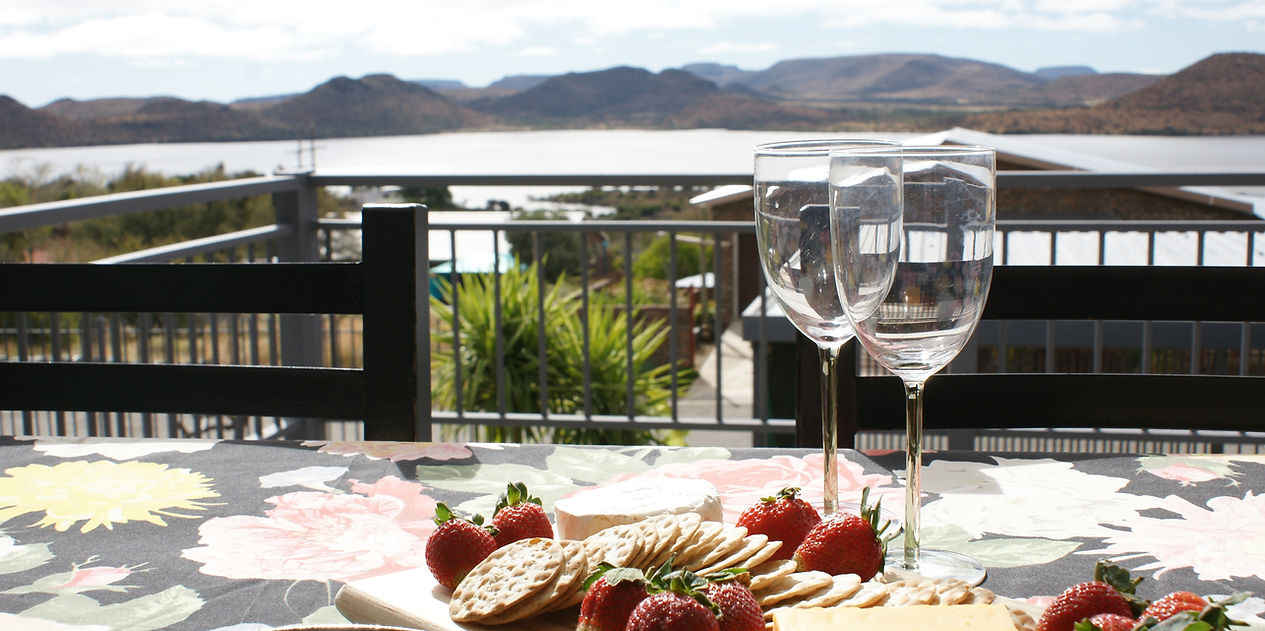
Vanderkloof offers access to the expansive Vanderkloof Dam, ideal for water-based activities and relaxation. The area features wide open spaces and the Orange River, providing opportunities for fishing and boating. Visitors can enjoy the calm environment, making it a suitable spot for a peaceful getaway.
## Accommodation in Vanderkloof
Vanderkloof's accommodation scene reflects its size: a small selection of properties serves visitors drawn primarily to the dam and the surrounding semi-arid landscape of the Northern Cape. No properties are currently listed through major booking platforms, and pricing for the area is not formally documented, so prospective visitors are best served by contacting local guesthouses or the Northern Cape tourism network directly before travelling.
At the budget end of the market, camping is both popular and practical. Several campsites sit close to the dam, making early-morning fishing or sunrise kayaking straightforward without a long drive. Facilities are basic at most sites, typically covering ablution blocks and braai areas, but the location compensates: open countryside, proximity to the water, and almost no light interference at night. Those who arrive with their own gear and supplies can put together a comfortable stay of several days at minimal cost.
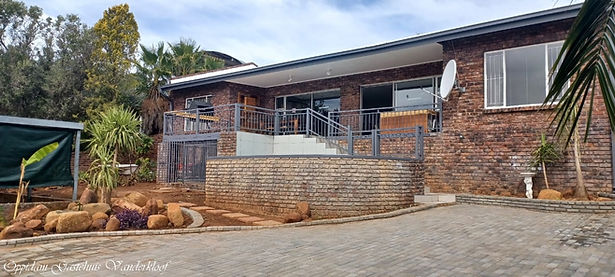
Mid-range options lean toward self-catering cottages and small guesthouses in and around town. Kitchen facilities matter here, as Vanderkloof has limited dining establishments. A well-equipped cottage suits visitors planning multi-day stays, giving flexibility to manage meals while spending daylight hours outdoors. Guesthouses, where they operate, tend to include breakfast and offer a more personal experience with hosts who know the local area well.
For a more complete stay, farm lodges in the surrounding district occasionally include guided activities, meals and private access to portions of the dam or farmland. These properties suit visitors who want arrangements in place before they arrive, rather than sorting out logistics on the ground. They also provide the clearest view of the agricultural character of the region, with farm routines often forming part of the experience.
Regardless of budget, early contact with providers is advisable. Availability during school holidays, long weekends and regional fishing events can be limited, and the informal booking market means last-minute options are rarely plentiful.
---
## Best Time to Visit Vanderkloof
Vanderkloof sits in a semi-arid climatic zone that shapes when visits are most comfortable and productive. Summers, from November through February, are hot, with temperatures frequently exceeding 35°C. Extended outdoor activity during midday hours becomes taxing, though early mornings and evenings remain usable for most pursuits.
Autumn and spring, roughly March to May and August to October, offer the most agreeable conditions. Temperatures are mild, rainfall is infrequent, and the dam tends to hold a stable water level during these months, which affects both watersports conditions and the quality of angling. Birdwatching is productive year-round along the dam's edges, though migratory species are more likely to be present during summer.
Winter, June and July, brings cold nights and mild days. The cooler temperatures suit hiking across the surrounding plains, and the clarity of the air on winter mornings makes the wide landscape particularly striking. Nights are genuinely cold, so gear should reflect that.
Peak visitation coincides with South African school holidays, particularly the December and April breaks, when families arrive for dam-based recreation. Fishing competitions and community events draw additional visitors on specific weekends. Travelling outside these windows reduces competition for limited accommodation and gives a more representative sense of the town's day-to-day character.
---
## Getting to Vanderkloof
Vanderkloof has no commercial air connection. The nearest airport with domestic scheduled flights is Kimberley Airport, roughly 120 kilometres to the north-east. From there, the drive south and west takes around 90 minutes on the N12 and connecting regional roads.
From Cape Town, the journey covers approximately 550 kilometres, heading north on the N1 to Colesberg, then turning west onto provincial roads toward the dam. From Johannesburg, the distance is similar: south on the N1 to Colesberg, then the same westward approach. Both are well-maintained national highway routes for the majority of the distance, with a shorter stretch of provincial road for the final approach into town.
There is no scheduled public transport serving Vanderkloof. Intercity bus services between Johannesburg and Cape Town stop at Colesberg, but the town itself does not appear on any major route. Visitors without a private vehicle would need to arrange a car hire in Kimberley before heading south. Within Vanderkloof, the town centre is walkable, but exploring the dam, farm accommodation and any of the wider regional destinations requires a vehicle. Standard passenger cars handle the main access roads without difficulty, though some farm tracks may benefit from slightly higher clearance.
---
## Vanderkloof and Surrounding Areas
The Northern Cape interior surrounding Vanderkloof contains several towns and landmarks within a couple of hours' drive, each with a distinct character worth knowing before planning day trips.
**Orania** (38 km), the closest of these destinations, is a small Afrikaner settlement on the Orange River that operates as a deliberately Afrikaans-speaking community, including its own local currency, the ora. It is not a conventional tourist stop, but it is sociologically distinctive, and visitors curious about South Africa's post-apartheid social landscape often include it as a detour. A small museum and basic visitor facilities are available.
**Colesberg** (87 km) sits at the junction of the N1 and N9, a well-worn staging point on the Cape Town to Johannesburg highway. The town has a fuller range of services than Vanderkloof, including supermarkets and restaurants, making it practical for resupplying. Some 19th-century architecture survives in the town centre, and there is a small heritage trail for those with time to spare.
The **Gariep Dam** (97 km) is South Africa's largest dam, considerably bigger than Vanderkloof, and supports a nature reserve that holds antelope, ostrich and other game. Watersports, boating and dam-side camping are all available, making it a full day or overnight destination in its own right. The adjacent service town of **Gariepdam** (98 km) provides fuel, basic supplies and accommodation geared toward visitors to the reserve and dam.
**Trompsburg** (101 km) is a quiet Karoo agricultural service town. It has limited visitor infrastructure but functions as a useful fuel and rest stop when travelling south, and gives a clear sense of the deep Karoo landscape.
**Edenburg** (118 km) is a small Free State town on the N1, with basic services and little dedicated visitor infrastructure. It works as a functional stopping point when heading north toward the Johannesburg corridor.
---
## Planning Your Stay
Vanderkloof rewards visitors who arrive with some preparation. Given the limited number of accommodation providers and the absence of a large formal booking market, contacting properties directly by phone or email is more reliable than relying on aggregator websites. When you make contact, ask about current availability, what is included in the rate, and whether any events are scheduled that might affect access to the dam or create noise during your stay.
Water levels at the dam vary depending on seasonal rainfall and upstream management decisions. If watersports or angling are the primary reason for your trip, checking current conditions with local operators before travelling avoids a wasted journey.
If fishing is part of your plans, confirm whether a valid South African freshwater fishing licence applies to the waters you intend to use. Licences are typically available from local municipalities and some tackle shops in the region.
Leave Vanderkloof with a full tank of fuel. Petrol stations are not consistently available along rural roads in the surrounding district, and running low between towns in this part of the Northern Cape is a genuine inconvenience. Carry drinking water and basic supplies when heading into the countryside for a day. Mobile data coverage is patchy in places, so downloading offline maps before arrival is a practical step. Medical facilities in town are limited, with full hospital services a significant drive away, so travellers with ongoing health considerations should factor this into their planning.

Vanderkloof's accommodation scene reflects its size: a small selection of properties serves visitors drawn primarily to the dam and the surrounding semi-arid landscape of the Northern Cape. No properties are currently listed through major booking platforms, and pricing for the area is not formally documented, so prospective visitors are best served by contacting local guesthouses or the Northern Cape tourism network directly before travelling.
At the budget end of the market, camping is both popular and practical. Several campsites sit close to the dam, making early-morning fishing or sunrise kayaking straightforward without a long drive. Facilities are basic at most sites, typically covering ablution blocks and braai areas, but the location compensates: open countryside, proximity to the water, and almost no light interference at night. Those who arrive with their own gear and supplies can put together a comfortable stay of several days at minimal cost.
Mid-range options lean toward self-catering cottages and small guesthouses in and around town. Kitchen facilities matter here, as Vanderkloof has limited dining establishments. A well-equipped cottage suits visitors planning multi-day stays, giving flexibility to manage meals while spending daylight hours outdoors. Guesthouses, where they operate, tend to include breakfast and offer a more personal experience with hosts who know the local area well.
For a more complete stay, farm lodges in the surrounding district occasionally include guided activities, meals and private access to portions of the dam or farmland. These properties suit visitors who want arrangements in place before they arrive, rather than sorting out logistics on the ground. They also provide the clearest view of the agricultural character of the region, with farm routines often forming part of the experience.
Regardless of budget, early contact with providers is advisable. Availability during school holidays, long weekends and regional fishing events can be limited, and the informal booking market means last-minute options are rarely plentiful.
---
## Best Time to Visit Vanderkloof
Vanderkloof sits in a semi-arid climatic zone that shapes when visits are most comfortable and productive. Summers, from November through February, are hot, with temperatures frequently exceeding 35°C. Extended outdoor activity during midday hours becomes taxing, though early mornings and evenings remain usable for most pursuits.
Autumn and spring, roughly March to May and August to October, offer the most agreeable conditions. Temperatures are mild, rainfall is infrequent, and the dam tends to hold a stable water level during these months, which affects both watersports conditions and the quality of angling. Birdwatching is productive year-round along the dam's edges, though migratory species are more likely to be present during summer.
Winter, June and July, brings cold nights and mild days. The cooler temperatures suit hiking across the surrounding plains, and the clarity of the air on winter mornings makes the wide landscape particularly striking. Nights are genuinely cold, so gear should reflect that.
Peak visitation coincides with South African school holidays, particularly the December and April breaks, when families arrive for dam-based recreation. Fishing competitions and community events draw additional visitors on specific weekends. Travelling outside these windows reduces competition for limited accommodation and gives a more representative sense of the town's day-to-day character.
---
## Getting to Vanderkloof
Vanderkloof has no commercial air connection. The nearest airport with domestic scheduled flights is Kimberley Airport, roughly 120 kilometres to the north-east. From there, the drive south and west takes around 90 minutes on the N12 and connecting regional roads.
From Cape Town, the journey covers approximately 550 kilometres, heading north on the N1 to Colesberg, then turning west onto provincial roads toward the dam. From Johannesburg, the distance is similar: south on the N1 to Colesberg, then the same westward approach. Both are well-maintained national highway routes for the majority of the distance, with a shorter stretch of provincial road for the final approach into town.
There is no scheduled public transport serving Vanderkloof. Intercity bus services between Johannesburg and Cape Town stop at Colesberg, but the town itself does not appear on any major route. Visitors without a private vehicle would need to arrange a car hire in Kimberley before heading south. Within Vanderkloof, the town centre is walkable, but exploring the dam, farm accommodation and any of the wider regional destinations requires a vehicle. Standard passenger cars handle the main access roads without difficulty, though some farm tracks may benefit from slightly higher clearance.
---
## Vanderkloof and Surrounding Areas
The Northern Cape interior surrounding Vanderkloof contains several towns and landmarks within a couple of hours' drive, each with a distinct character worth knowing before planning day trips.
**Orania** (38 km), the closest of these destinations, is a small Afrikaner settlement on the Orange River that operates as a deliberately Afrikaans-speaking community, including its own local currency, the ora. It is not a conventional tourist stop, but it is sociologically distinctive, and visitors curious about South Africa's post-apartheid social landscape often include it as a detour. A small museum and basic visitor facilities are available.
**Colesberg** (87 km) sits at the junction of the N1 and N9, a well-worn staging point on the Cape Town to Johannesburg highway. The town has a fuller range of services than Vanderkloof, including supermarkets and restaurants, making it practical for resupplying. Some 19th-century architecture survives in the town centre, and there is a small heritage trail for those with time to spare.
The **Gariep Dam** (97 km) is South Africa's largest dam, considerably bigger than Vanderkloof, and supports a nature reserve that holds antelope, ostrich and other game. Watersports, boating and dam-side camping are all available, making it a full day or overnight destination in its own right. The adjacent service town of **Gariepdam** (98 km) provides fuel, basic supplies and accommodation geared toward visitors to the reserve and dam.
**Trompsburg** (101 km) is a quiet Karoo agricultural service town. It has limited visitor infrastructure but functions as a useful fuel and rest stop when travelling south, and gives a clear sense of the deep Karoo landscape.
**Edenburg** (118 km) is a small Free State town on the N1, with basic services and little dedicated visitor infrastructure. It works as a functional stopping point when heading north toward the Johannesburg corridor.
---
## Planning Your Stay
Vanderkloof rewards visitors who arrive with some preparation. Given the limited number of accommodation providers and the absence of a large formal booking market, contacting properties directly by phone or email is more reliable than relying on aggregator websites. When you make contact, ask about current availability, what is included in the rate, and whether any events are scheduled that might affect access to the dam or create noise during your stay.
Water levels at the dam vary depending on seasonal rainfall and upstream management decisions. If watersports or angling are the primary reason for your trip, checking current conditions with local operators before travelling avoids a wasted journey.
If fishing is part of your plans, confirm whether a valid South African freshwater fishing licence applies to the waters you intend to use. Licences are typically available from local municipalities and some tackle shops in the region.
Leave Vanderkloof with a full tank of fuel. Petrol stations are not consistently available along rural roads in the surrounding district, and running low between towns in this part of the Northern Cape is a genuine inconvenience. Carry drinking water and basic supplies when heading into the countryside for a day. Mobile data coverage is patchy in places, so downloading offline maps before arrival is a practical step. Medical facilities in town are limited, with full hospital services a significant drive away, so travellers with ongoing health considerations should factor this into their planning.
Vanderkloof Kaart
Nabygeleë Bestemmings
Blaai Deur Alle Vanderkloof Akkommodasie
Bekyk al 0 akkommodasie-opsies in Vanderkloof met foto's, pryse en beskikbaarheid.
Blaai Deur Alle Akkommodasie