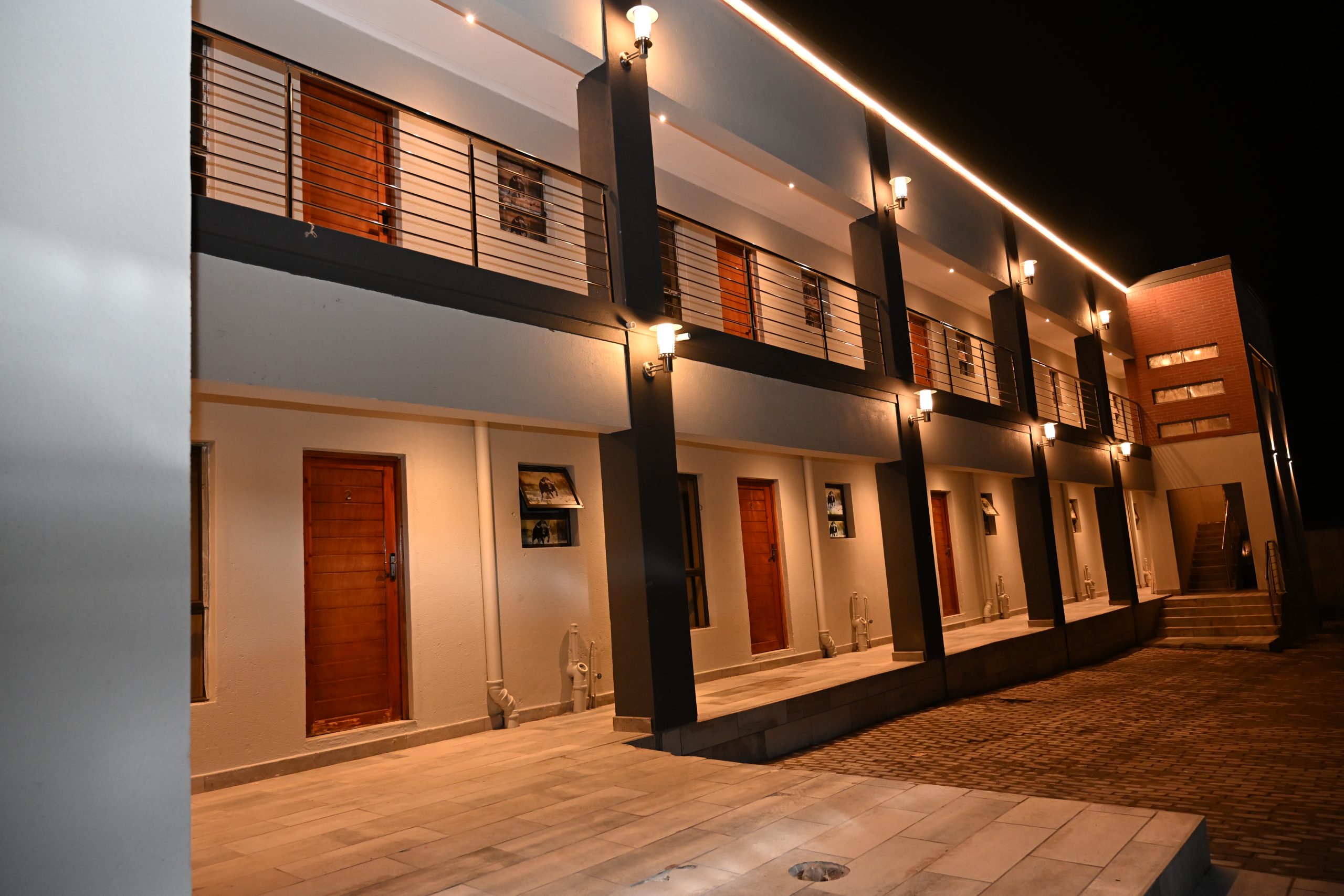
Accommodation in Ga-makhwae
Formal listings for Ga-makhwae on mainstream booking platforms currently number zero, with nightly rates not publicly tracked. This reflects how the local accommodation market operates: transactions happen through direct contact and community networks rather than aggregator sites, and the village functions as an agricultural settlement rather than a tourist destination.
At the budget end, guesthouses attached to family homes are the most accessible option. These range from a spare room with basic furniture to small properties where outbuildings have been converted for guests. Shared bathrooms are common, and breakfast is sometimes available if arranged in advance. The standard is functional rather than polished, but the experience puts you inside a working household and provides a form of contact with local life that more formal properties rarely offer.
Self-catering cottages and farm-stay units make up the mid-range. Properties set within the surrounding farming land typically provide more space and independence. A kitchen proves practical here, given that the village has limited food retail and stocking up before arrival is sensible. Families and small groups tend to favor this option, particularly for stays of two or more nights.
Higher-end accommodation does not exist within the village in any established form. Travelers expecting en-suite bathrooms, air conditioning, and reliable Wi-Fi need to look toward the wider Mopani District, where guesthouses and small lodges provide these amenities. The tradeoff is driving distance: properties with better infrastructure tend to sit closer to main arterial roads, which shifts the experience from an immersive rural stay to a comfortable base with daily excursions.
Securing a place requires direct contact. Most properties do not operate standard check-in systems or hold reservations through third-party channels. Confirming arrival times and facilities by phone, before departure, prevents misunderstandings on arrival.
Best Time to Visit Ga-makhwae
Ga-makhwae follows the subtropical weather cycle common to the Letaba region. Summer runs from November through February, bringing warm to hot temperatures alongside heavy afternoon rainfall. The surrounding orchards are at their most active during these months, with fruit harvests running from December into early February. Birdwatchers find the summer particularly rewarding, as migratory species arrive from central and East Africa and concentrate along drainage lines, woodland edges, and farmland boundaries. Secondary roads between villages can become soft and difficult after heavy downpours, and movement across the area requires more care during this period.
Winter, from June through August, is dry and considerably cooler. Nights in July can drop close to 10 degrees Celsius, which surprises visitors expecting warmth throughout. Days are clear and comfortable, vegetation thins, and visibility across the surrounding hills improves markedly. This season suits travelers wanting to explore the broader region without the afternoon storms that punctuate summer.
The shoulder months, April to May and September to October, offer a practical compromise. Temperatures are moderate, roads are generally clear, and visitor pressure on limited accommodation is lower. Spring in September sees heat building again and the landscape shifting quickly as the rains approach.
Getting to Ga-makhwae
The main road route from Johannesburg follows the N1 north to Polokwane, then the R71 east through the Letaba River valley toward Tzaneen. From Tzaneen, Ga-makhwae lies roughly 40 kilometers further along roads that branch off the main corridor. The full journey from Johannesburg covers approximately 450 kilometers and takes between five and six hours depending on traffic.
Polokwane Airport receives scheduled domestic flights from Johannesburg and Cape Town and sits about 175 kilometers from the village. It is the practical air gateway for the Limpopo interior. Hoedspruit Airport, smaller and handling charter and regional traffic, lies around 90 kilometers to the east and suits travelers coming from or continuing into the lowveld corridor. The Phalaborwa Gate, the closest entry point to Kruger National Park, sits approximately 80 kilometers east of Ga-makhwae.
A private vehicle is essential once in the area. Minibus taxis connect larger nodes in the region but run infrequent and unpredictable routes between smaller villages, making them unsuitable for planned travel. The main tarred roads are in reasonable condition. Farm tracks and rural connectors vary considerably, and while a standard car handles most routes in dry conditions, higher clearance helps on unpaved approaches. Download offline maps before leaving any major town, as mobile signal drops in some pockets near the village.
Ga-makhwae and Surrounding Areas
The villages around Ga-makhwae form a closely spaced rural network, most within a 20-kilometer radius. All share the Sepedi cultural identity and the agricultural character of the Mopani District, but each occupies distinct terrain and has its own community life worth knowing before you set out.
Ga-mahlokwane, 6 kilometers away, is the nearest neighbor and the most naturally connected to Ga-makhwae by road. The route passes through farm plots and orchards, and the two settlements share deep community ties. It makes an easy first excursion from the base village and gives immediate context for how land use is organized across the hillside terrain.
Ga-mongatane, 7 kilometers out, sits at a slightly higher elevation with open views across the valley. The village is associated with traditional governance structures, and visitors interested in how rural Sepedi communities organize themselves socially and politically will find it a worthwhile stop beyond the agricultural context.
Ga-mamphahlane, at 9 kilometers, marks a transition toward denser bush to the south. It acts as a convenient waypoint for those heading toward the Wolkberg Wilderness Area, which requires a longer drive and offers hiking through Afromontane forest and highland grassland.
Ga-mashishi, 12 kilometers from the base, sits deeper into the farming hinterland. Subsistence plots sit alongside larger commercial operations, and the mix reflects the economic range found across rural Limpopo. Small roadside markets appear along the route during harvest season.
Ga-makofane, 18 kilometers out, is the furthest of the close cluster in that direction. The drive passes working farms and, in season, informal fruit stalls that set up along the verge when produce is ready to sell.
Radingwane, at 19 kilometers, occupies flatter terrain than the hillier villages closer to the base. The topography opens noticeably on approach, and the contrast in landscape is striking after traveling through the rolling hills that characterize the inner cluster. It makes a logical final stop on a loop through the surrounding area.
Planning Your Stay
Ga-makhwae is largely absent from mainstream booking platforms, so planning requires direct research. Start by searching for properties in the broader Mopani area and contacting hosts directly to ask whether anything is available closer to the village. Local tourism offices and community contacts often know of options that have never appeared online.
Demand for the limited accommodation available rises during school holidays and public long weekends. In these windows, booking several weeks ahead is sensible. At quieter times, a few days' notice is usually sufficient, though confirming the day before arrival is still worthwhile given that hosts may not monitor their phones consistently throughout the day.
Before confirming any booking, ask about electricity supply, whether grid-connected or solar and generator, and water reliability. Clarify the cancellation terms, as these vary and are rarely written down formally. Self-catering guests should check what kitchen equipment is actually provided, since assumptions about fit-out differ considerably between properties. Card payment facilities are uncommon; carry sufficient cash for accommodation, local purchases, and fuel.
Keep your host's contact details accessible without a data connection. Arriving after dark adds difficulty on rural roads where signage is sparse. Familiarizing yourself with the final stretch of the route while it is still light makes arrival considerably simpler.