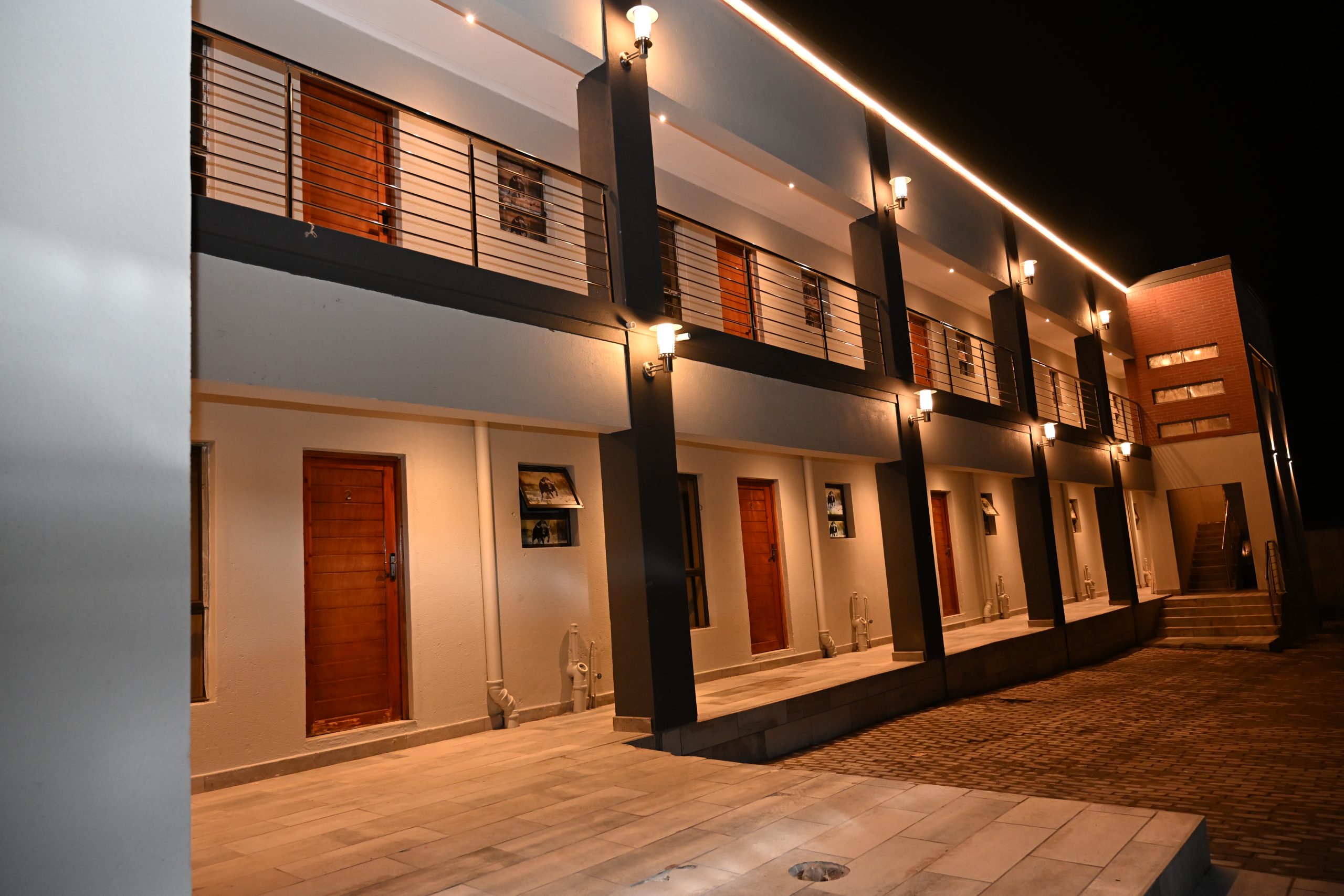
Accommodation in Ga-mahlokwane
The accommodation market in Ga-mahlokwane remains underdeveloped by conventional tourism standards. No properties are currently listed on major booking platforms, and pricing benchmarks for the area are not established in any formal sense. What exists tends toward informal arrangements: community-run guesthouses, homestays with local families, and basic self-catering cottages attached to smallholdings or agricultural plots.
At the budget end, visitors typically arrange stays through community contacts or local tourism networks, sleeping in modest rooms within family compounds. These arrangements offer genuine insight into daily Pedi domestic life, with shared meals cooked over wood fires and evenings spent in communal spaces where conversation carries more weight than entertainment. Facilities are basic, often relying on borehole water and intermittent electricity from municipal supply or small solar setups.
Mid-range options, where they exist, are usually small guesthouses operated by community cooperatives or by locals who have returned from urban centres and invested in modest hospitality ventures. Expect en-suite rooms, more reliable utilities, and hosts who speak English alongside Sepedi. These properties often include a shaded outdoor area and assist guests in arranging access to local guides, traditional healers, or community craft makers.
The upper tier in a rural area like this rarely means luxury in the conventional sense. It tends to mean a well-maintained farmstead or lodge on a private plot where the owner has made deliberate investments in guest comfort, perhaps with a pool, reliable solar power, and meals prepared with produce from the surrounding land. The outdoor environment becomes the main amenity, with birdsong, open skies, and the pace of agricultural life doing most of the work.
Across all tiers, the experience in Ga-mahlokwane is shaped more by the people hosting you than by physical infrastructure. Visitors accustomed to hotel-standard facilities should calibrate expectations before arriving, and those who do will often find the adjustment worthwhile.
Best Time to Visit Ga-mahlokwane
The Mopani District follows a subtropical pattern, and the time of year makes a practical difference to both comfort and what you can do on the ground.
The dry season runs from May through August, bringing clear skies, cool nights, and daytime temperatures well suited to walking and outdoor activity. Vegetation thins during this period, which makes wildlife and birds easier to observe in the bushveld. Dust becomes a constant companion by July, as unpaved roads and farmland tracks turn powdery, but the trade-off is near-guaranteed sunshine and manageable heat throughout the day.
Summer, from October through March, brings humidity alongside reliable afternoon thunderstorms that typically arrive by mid-afternoon and clear within an hour. Mornings during this period are generally bright and productive. Mango orchards reach peak production between November and February, adding a sensory dimension to the landscape that winter visitors miss. Birdwatching improves considerably during summer as migratory species arrive and resident birds become more active.
The quietest period for visitors to the broader region runs from April through June, once the rains have cleared and before the July school holiday season drives domestic tourism. Travelling in this shoulder window typically means more undivided attention from community hosts and a calmer, less pressured pace.
Getting to Ga-mahlokwane
The nearest commercial airport is in Polokwane, the provincial capital of Limpopo, approximately 130 kilometres to the west. Regular scheduled flights connect Polokwane to Johannesburg, and the drive from the airport to the village takes around two hours under normal conditions. Those arriving on international flights will transit through Johannesburg's OR Tambo International Airport before connecting.
From Johannesburg, the standard driving route follows the N1 north before joining the R71 east toward Tzaneen. Total driving time from Johannesburg is approximately four and a half to five hours, depending on traffic through the Pretoria corridor. An alternative route via the R36 and Haenertsburg offers a more scenic crossing of the escarpment but adds time to the journey and requires confidence on winding mountain roads.
Tzaneen, around 40 kilometres from Ga-mahlokwane, functions as the last major service town. Beyond it, roads narrow progressively, and a vehicle with reasonable ground clearance manages district roads more comfortably than a standard sedan, particularly in summer when rainfall softens certain tracks. Public minibus taxis link Tzaneen to surrounding villages but run on irregular schedules that do not accommodate tourist itineraries. For most visitors, either a personal vehicle or hiring a local guide with their own transport is the practical solution.
Ga-mahlokwane and Surrounding Areas
The villages surrounding Ga-mahlokwane form a compact cluster within the Mopani District, each shaped by the same agricultural economy and Sepedi-speaking social fabric. Used together as day-trip destinations, they build a more complete picture of how rural Limpopo organises itself beyond any single community.
Ga-makhwae, six kilometres away, is the closest neighbouring settlement and shares the same smallholder farming character as Ga-mahlokwane. The distance makes it accessible on foot or by bicycle, and visiting when community gatherings or informal market activity occur gives a comparative sense of how public life differs between closely related villages.
Ga-mashishi and Ga-mamphahlane, both nine kilometres out in different directions, function as slightly larger service nodes within the district. Secondary schools and basic health clinics draw people from surrounding areas to these villages, and time spent around their centres reveals the social infrastructure that holds rural Limpopo together: the tuck shops, churches, and school grounds around which daily rhythms organise.
Ga-mongatane, also nine kilometres distant, has associations with traditional leadership structures in the area. Homestead patterns around the village reflect older settlement histories, and a local guide from Ga-mahlokwane can provide meaningful context on the clan relationships and land histories connecting these communities. Visitors with an interest in how traditional governance and modern municipal administration coexist will find the area informative.
Ga-makofane, twelve kilometres away, sits within the same agricultural corridor but shows early signs of the shift between communal smallholdings and larger commercial farming operations. The road between here and Ga-mahlokwane passes through open bushveld terrain that supports a variety of bird species, making the drive itself worthwhile for anyone with binoculars.
Derdegelid, fourteen kilometres out, carries an Afrikaans name that reflects the commercial farming history of the district. The area is associated with smallholding and agricultural activity of a different character from the surrounding communal villages, and the contrast in land use tells a visible story about the layered tenure history of post-apartheid Limpopo. It rounds out a circuit of the immediate surroundings in a way that adds historical perspective to the cultural focus of the other destinations.
Planning Your Stay
Because Ga-mahlokwane has no established presence on mainstream booking platforms, planning requires more direct effort than most destinations. A practical starting point is a tour operator or community tourism contact in the Tzaneen area, as these intermediaries maintain working relationships with local hosts and can confirm what is genuinely available before you commit to dates.
When confirming a booking, ask specifically about water supply reliability, power arrangements, and current road conditions on the access route. Summer visitors should check whether recent rainfall has affected the track to their accommodation. Hosts with experience of outside visitors will answer these questions without hesitation, and evasive or vague responses are worth taking seriously before paying a deposit.
Mobile data coverage is inconsistent across parts of the district. Before leaving the last major town, download offline maps of the areas you plan to visit and save your host's number in a way accessible without signal. Local communication typically happens via WhatsApp rather than voice calls, so a message confirming your estimated arrival is standard practice and appreciated.
Carry sufficient cash for the duration of your stay. Community guesthouses and homestay hosts do not process card payments, and there is no banking infrastructure within the village. Build a small contingency into your cash budget to cover unexpected expenses and avoid unnecessary return journeys to the nearest ATM.